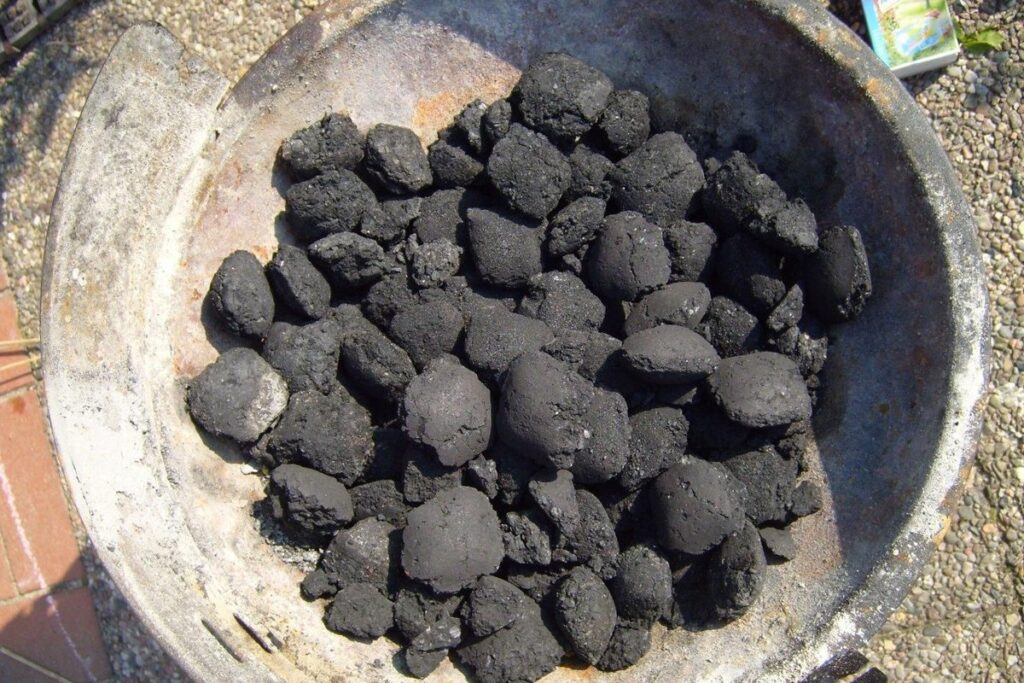
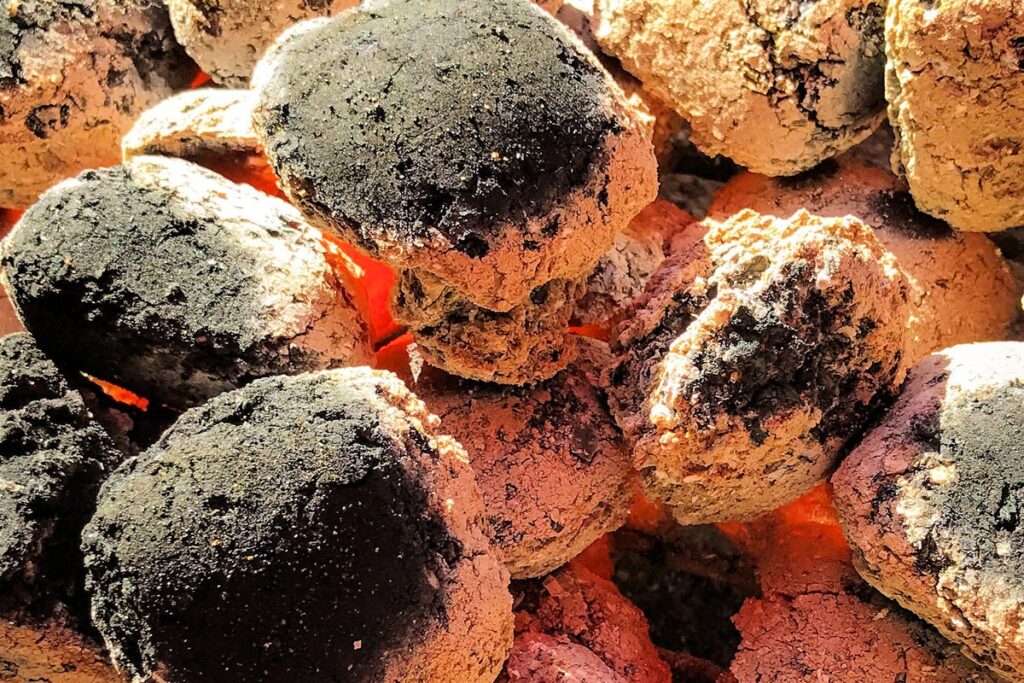
A charcoal briquettes MOQ is the smallest order a supplier will produce, pack and ship in one consignment, and it depends heavily on how the goods travel: shared space in a groupage container (LCL) or a whole 20 ft or 40 ft container of your own (FCL).
This guide is for importers, distributors, procurement managers and shisha lounge owners in the Middle East and Europe buying coconut shell charcoal briquettes from Indonesia. Trial buyers should start with MOQ and load types; regular importers will get more from the sections on landed cost and mixed containers.
Key Takeaways
- An MOQ exists because every export order carries fixed costs; at Agro Bumi the charcoal briquettes MOQ is confirmed when you request a quote.
- LCL suits trial orders and new brands; FCL suits repeat buyers with steady demand.
- Cost per unit usually falls with FCL because the fixed costs of the box are spread over more cartons.
- The IMDG Code lists charcoal as UN 1361, Class 4.2, so check cargo status with your forwarder before booking LCL.
- Incoterms 2020 (FOB, CFR, CIF, DAP) decide who pays for each leg and when risk passes.
- Wooden pallets must meet ISPM 15: core heat treatment at 56 °C for at least 30 minutes and an IPPC mark.
- A mixed container with white copra can help fill an FCL, provided the cargo is compatible.
What a charcoal briquettes MOQ is and why suppliers set one
A minimum order quantity reflects arithmetic, not sales tactics. Each export order triggers roughly the same block of work regardless of size: press set-up, drying, testing, packing, export documents, space booking and loading. Below a certain volume, those fixed costs make the price per carton unreasonable.
Several factors shape the charcoal briquettes MOQ you will be quoted:
- Specification. A shape or size that differs from standard stock needs mould changes and fresh testing.
- Packaging. Plain export cartons are flexible; private label boxes need printing runs that carry their own minimums.
- Load type. The minimum for an LCL shipment is usually different from the minimum for FCL, which often means one full container.
- Production calendar. Busy-season orders may carry different terms from orders filled from ready stock.
At PT Agro Bumi Sumatera the charcoal briquettes MOQ is therefore confirmed through a request a quote. Tell us which item you are interested in from our product range, the specification, the packaging, the destination country and the load type you are considering, and we will reply with a minimum that fits your order.
LCL and FCL: sharing a container or filling one
LCL (less than container load) is a groupage service. A consolidator collects cargo from several shippers at a container freight station (CFS), ships it in one box and unpacks it at a CFS at destination. You pay by cubic metre or by weight.
FCL (full container load) means you book an entire intermodal container. For briquettes the usual sizes are the 20 ft and 40 ft container, plus the taller 40 ft high cube. The box is stuffed and sealed at the supplier’s warehouse, and freight is charged per container.
| Factor | LCL | FCL (20 ft / 40 ft) |
|---|---|---|
| Order size | Small to medium, suited to market tests | One full container or more |
| Freight basis | Per cubic metre or weight | Per container |
| Cost per unit | Usually higher | Usually lower |
| Transit time | Longer, with consolidation and CFS stages | Shorter and more predictable |
| Handling | Cartons moved several times; more risk of damage or damp | Sealed from the supplier’s warehouse to destination |
| Dangerous goods | Many consolidators restrict or refuse Class 4.2 cargo | Easier to arrange with the carrier when paperwork is complete |
| Best for | First-time buyers, commercial samples, new brands | Repeat buyers, distributors, wholesalers |
The dangerous goods row matters for charcoal. The IMDG Code lists charcoal as UN 1361, Class 4.2 (substances liable to spontaneous combustion). Some briquettes can be shipped outside the dangerous goods regime if they pass the self-heating test under special provision 925 and Test N.4 of the UN Manual of Tests and Criteria. Consolidators generally want that report before accepting a booking, so whatever charcoal briquettes MOQ you agree, raise cargo status with your forwarder early.
Trial orders versus repeat orders
The right load type, and therefore the right charcoal briquettes MOQ for you, depends on how well you know your supplier and your market.
First-time buyers
A new buyer usually wants to see the product in customers’ hands before committing. LCL allows that: less working capital tied up and a chance to test how lounges or retailers react to a particular size.
The drawbacks: cost per carton is higher, arrival dates depend on the consolidator’s schedule, and cartons change hands several times. Briquettes are hygroscopic and can absorb moisture in a humid CFS. For a small trial, ask for sealed inner packs and strong outer cartons.
Repeat buyers
Once the specification is settled and sales are steady, FCL nearly always makes more sense. A 20 ft container is the usual first step up from LCL, then a 40 ft once stock turns quickly. A sealed box reduces the risk of mixed-up or crushed cartons, and a regular schedule, agreed at quotation stage, lets the supplier plan raw material ahead.
How load type changes your landed cost per unit
What matters to procurement is landed cost: everything paid until the cartons reach your warehouse, divided by the number of units. Part of that cost is fixed: export documentation, terminal handling, inspection and forwarder fees. The more cartons share it, the lighter the load on each.
With LCL you pay freight per cubic metre plus CFS handling at origin and destination. Destination CFS charges often surprise new importers. With FCL the freight per container looks large, yet divided across a full box the cost per carton usually drops, and destination CFS fees disappear.
As an illustrative example only, not a product claim: if briquettes are packed in 1 kg inner boxes inside 10 kg cartons, each extra carton added to an FCL barely changes the fixed costs, while each extra carton in an LCL shipment adds billable cubic metres. That is why buyers whose orders approach half a container, and whose charcoal briquettes MOQ allows it, often move straight to FCL.
Other factors that move the cost per unit:
- Palletised versus floor-loaded cartons. Pallets speed up unloading but take space and must comply with ISPM 15.
- The Incoterm chosen, which decides which costs sit inside the quoted price.
- Unloading, storage and demurrage at the port of discharge.
Incoterms 2020: who pays and who carries the risk
Incoterms 2020, published by the ICC, divide tasks, costs and risk between seller and buyer. The term should appear in both quotation and contract with a named place. The four most common in briquette trade:
| Term | Seller covers | Buyer covers | Risk passes |
|---|---|---|---|
| FOB (Free On Board) | Production, transport to the port of loading, export clearance, loading on board | Ocean freight, insurance, unloading, import duty, onward transport | When goods are on board at the port of loading |
| CFR (Cost and Freight) | Everything under FOB plus ocean freight to the destination port | Insurance, unloading, import duty, onward transport | When goods are on board at the port of loading |
| CIF (Cost, Insurance and Freight) | Everything under CFR plus minimum marine insurance | Unloading, import duty, onward transport | When goods are on board at the port of loading |
| DAP (Delivered at Place) | Carriage to the agreed place in the destination country | Unloading from the vehicle, import duty and taxes | When goods are ready for unloading at the named place |
Often missed: under CFR and CIF the seller pays freight, but risk passes to you once goods are on board, so a CIF insurance claim for damage at sea is yours to make. For LCL, goods are handed over at a CFS, so mention your load type when requesting a quote and the named place can be set accordingly.
Documents your customs broker will ask for
Complete paperwork decides whether a container clears customs or sits at the port accruing storage. The list below is typical; final requirements depend on the destination and, under a letter of credit, your bank.
- Commercial invoice with the description, HS code, quantity and Incoterm.
- Packing list showing carton count, gross and net weight, and shipping marks.
- Bill of lading from the carrier (FCL) or a house bill from the forwarder (LCL).
- Certificate of origin, which may allow preferential duty where a trade agreement applies.
- Safety data sheet and, where available, the self-heating test report that explains the cargo’s status against UN 1361.
- Certificate of analysis or laboratory report. Common references include ASTM D1762-84 for moisture, volatile matter and ash, and EN 1860-2 for barbecue charcoal sold in Europe.
- Pallet treatment evidence under ISPM 15 from the IPPC if wooden pallets are used.
Indonesia’s own benchmark for wood charcoal briquettes, SNI 01-6235-2000, sets a maximum moisture content of 8%, a maximum ash content of 8% and a minimum calorific value of 5,000 cal/g. These are standard thresholds, not product figures. Ask your supplier which parameters are tested, by which laboratory, and which certificates can accompany your order. Buyers in GCC markets and the EU should also check local labelling rules with their broker.
From request a quote to loading: the sequence
The steps are the same for LCL and FCL except at booking and loading.
- Request a quote. You send the specification, packaging, destination, estimated volume, load type and preferred Incoterm.
- Quotation and samples. We reply with the charcoal briquettes MOQ, a price under the agreed Incoterm and an estimated ready date.
- Order confirmation. A proforma invoice is agreed, including payment terms and artwork for private label.
- Production and testing. Briquettes are produced, dried, tested and packed.
- Space booking. For FCL a container is booked with the carrier; for LCL space is booked with a consolidator, who sets a cut-off for delivery to the CFS.
- Loading. An FCL is stuffed at the supplier’s warehouse, photographed and sealed. LCL cargo is delivered to the CFS.
- Export documents and sailing. Documents are prepared, the goods sail and copies are sent to the buyer.
You can see our product and facilities in the Agro Bumi gallery.
Consolidating briquettes with other products
If your briquette volume does not yet justify a full container, you can combine several products from the same supplier in one FCL. Agro Bumi also supplies white copra, so importers of more than one commodity can discuss a mixed container and keep their charcoal briquettes MOQ manageable.
A mixed container works best when these points are settled first:
- Cargo compatibility. Class 4.2 status for charcoal can bring segregation rules. Confirm every product may share the box.
- Separate paperwork. HS codes, descriptions and import requirements differ by product, so the packing list should separate each product’s cartons.
- Moisture and odour. Briquettes and agricultural goods are both sensitive to damp; use desiccants and separation sheets between pallets.
- Aligned production. A mixed container can only load once every product is ready, so discuss ready dates at the quotation stage.
Briquette types can be mixed too, such as shisha cubes with barbecue shapes. Lounge buyers can see our shisha charcoal briquettes supplier page, and distributors the coconut charcoal briquettes product page or our briquettes guide.
FAQ
What is the charcoal briquettes MOQ at Agro Bumi?
The minimum order is confirmed when you request a quote. It depends on the briquette specification, whether packaging is plain or private label, whether you ship LCL or FCL, and the production calendar when the order arrives. Send those details with your destination and estimated volume, and we will reply with a minimum that fits your order.
Can charcoal briquettes be shipped LCL?
Yes, but not every consolidator accepts charcoal, because the IMDG Code lists it as UN 1361, Class 4.2. Briquettes that pass the self-heating test under special provision 925 can be exempted, and consolidators usually ask for that report. Discuss cargo status with your forwarder before booking space, so the shipment is not refused at the container freight station.
Is LCL or FCL cheaper per carton?
For small volumes LCL costs less in total because you only pay for the space used. Once your order approaches half a container, FCL usually wins on cost per carton: freight is charged per box, destination CFS fees disappear and fixed costs are spread more widely. Compare full landed cost, not ocean freight alone.
Which Incoterm suits a first order?
Buyers without a forwarder in Indonesia often prefer CFR or CIF, because the seller arranges the vessel to the destination port. Buyers with their own forwarder tend to choose FOB so they can compare freight rates. DAP suits importers who want delivery to a named place. State your preference when you request a quote, so the price is built on the right term.
Does a mixed container change the charcoal briquettes MOQ?
It can. Combining briquettes with white copra or other briquette types lets a smaller briquette volume travel in a full FCL. Compatibility must be checked with your forwarder and carrier first, since charcoal may fall under Class 4.2 segregation rules, and paperwork is prepared separately for each product. The exact minimum for each item is confirmed in the quotation.
Conclusion
Your charcoal briquettes MOQ and your load type are one decision, not two. Trial orders gain flexibility from LCL at a higher cost per carton; repeat buyers gain lower landed cost and safer cargo from a 20 ft or 40 ft FCL. Cargo status under UN 1361, the Incoterm, ISPM 15 compliance and complete documents should all be settled before space is booked.
As a next step, prepare your specification, packaging, destination, estimated volume and preferred Incoterm; we will use them to quote the minimum and price. You can read more about us on our charcoal briquettes supplier in Indonesia page.
To request a quote, contact our export team on WhatsApp +62 812-7444-4459, call the office on +62 813-6666-888 or email ade@agrobumisumatera.co.id. Other contact details are on our contact page.