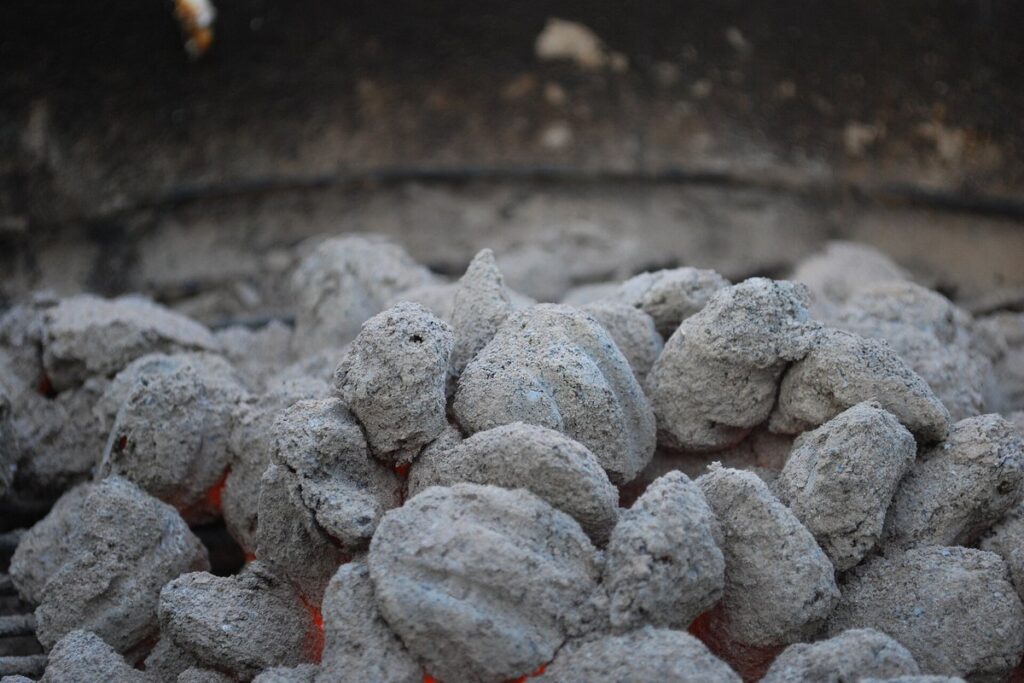
Coconut charcoal briquettes are the export product at the centre of our business, and this guide is written for the people who buy them by the container rather than by the bag. It covers specification, grading, packaging and the commercial terms that determine whether a shipment is repeatable.
Every figure below comes from our production line in Jambi, Sumatra. The technical sheet is also on the product page.
Daftar Isi
ToggleWhy Coconut Charcoal Briquettes Beat Wood Charcoal
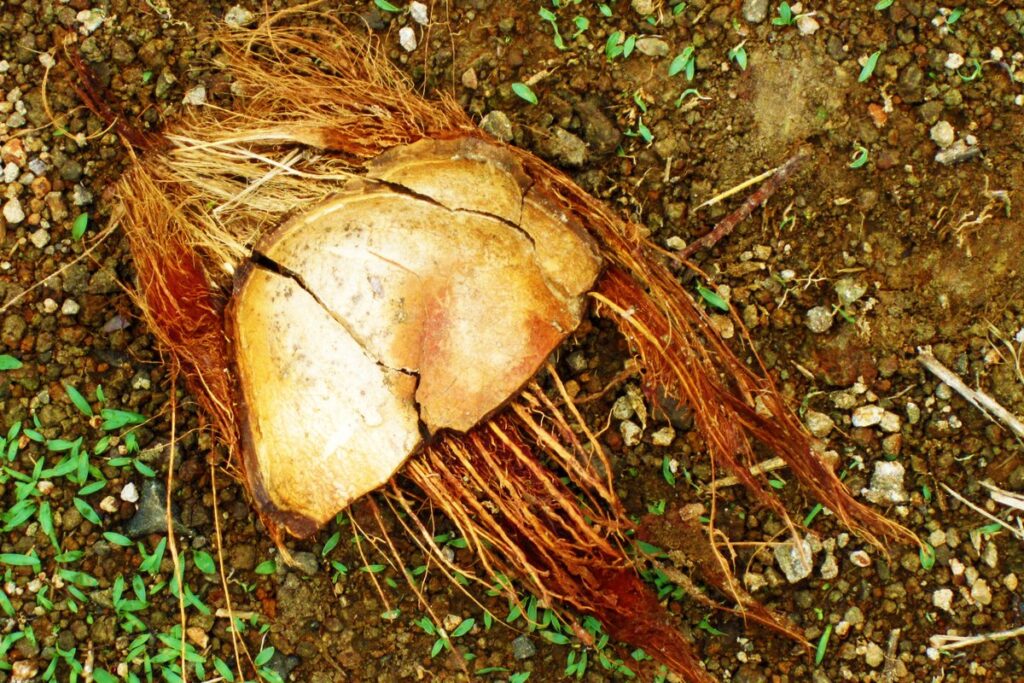
The raw material is the advantage. Coconut shell is a by-product of coconut oil production, far denser than wood, and available in consistent volume across Sumatra year round rather than tied to a timber harvest.
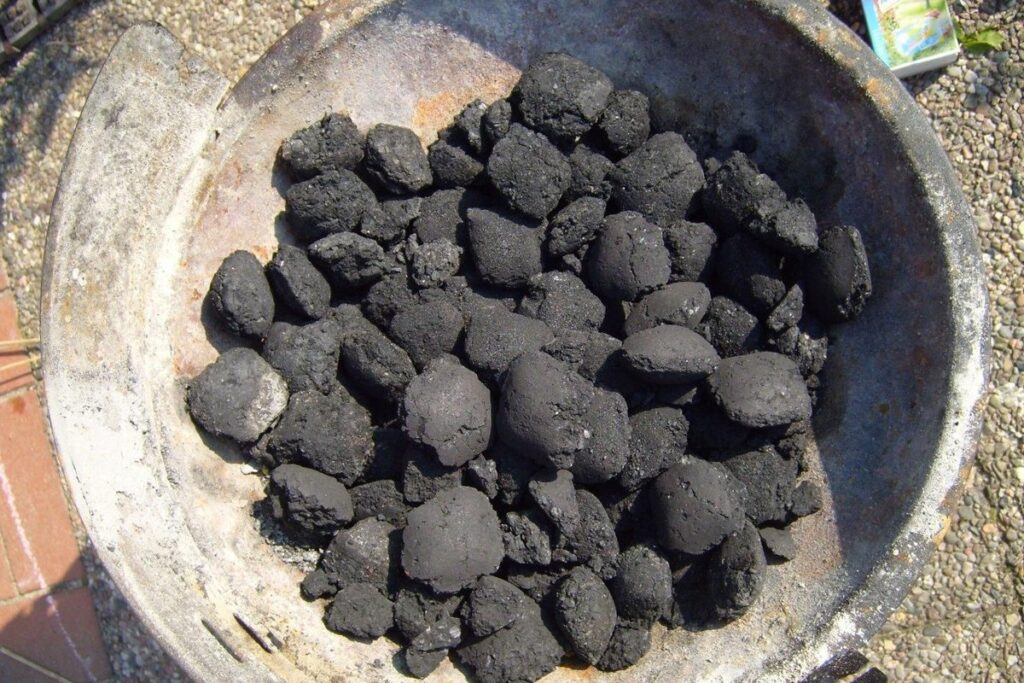
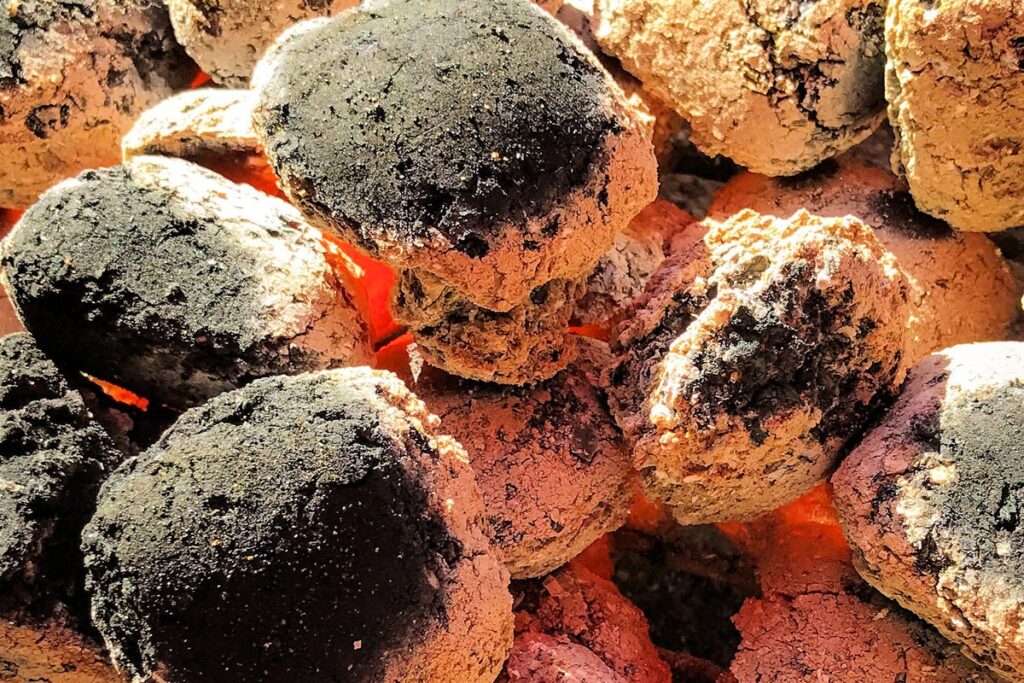
Density translates directly into fuel performance: higher fixed carbon per unit mass, a calorific value of 7,200 to 7,500 kcal/kg, a burn time of 2.5 to 3+ hours per load and ash residue of maximum 1.8 to 2.5% against 5 to 8% for most wood charcoal.
Because the shell is fully carbonised before pressing, there are no volatile compounds left to create odour, sparks or bitter taste. That neutrality is why the same raw material is the standard for both premium barbecue fuel and shisha charcoal.
Coconut Charcoal Briquettes Specifications
This is our standard export specification. Deviations are possible by agreement, but these are the numbers a buyer should expect to see on a Certificate of Analysis.
| Parameter | Specification |
|---|---|
| Material | 100% pure natural coconut shell charcoal |
| Fixed carbon | Minimum 75 to 80% |
| Calorific value | Minimum 7,200 to 7,500 kcal/kg |
| Ash content | Maximum 1.8 to 2.5% (white to light grey) |
| Moisture content | Maximum 5 to 6% |
| Burning time | Up to 2.5 to 3+ hours |
| Shapes | Cube, hexagonal, flat/pillow, custom |
| Cube dimensions | 22x22x22, 25x25x25, 26x26x26, 27x27x27 mm |
| Binder | None, chemical and binder free |
Buyers should ask for the COA before the proforma invoice, not after the container arrives. A specification that exists only in an email is not a specification.
BBQ Grade vs Shisha Grade Coconut Charcoal
Same raw material, different requirements, and mixing the two is a common sourcing error.
| BBQ grade | Shisha grade | |
|---|---|---|
| Size | Larger blocks and pillows | 22 to 27 mm cubes, hexagons |
| Burn time | 2.5 to 3+ hours per load | 60 to 90 minutes per cube |
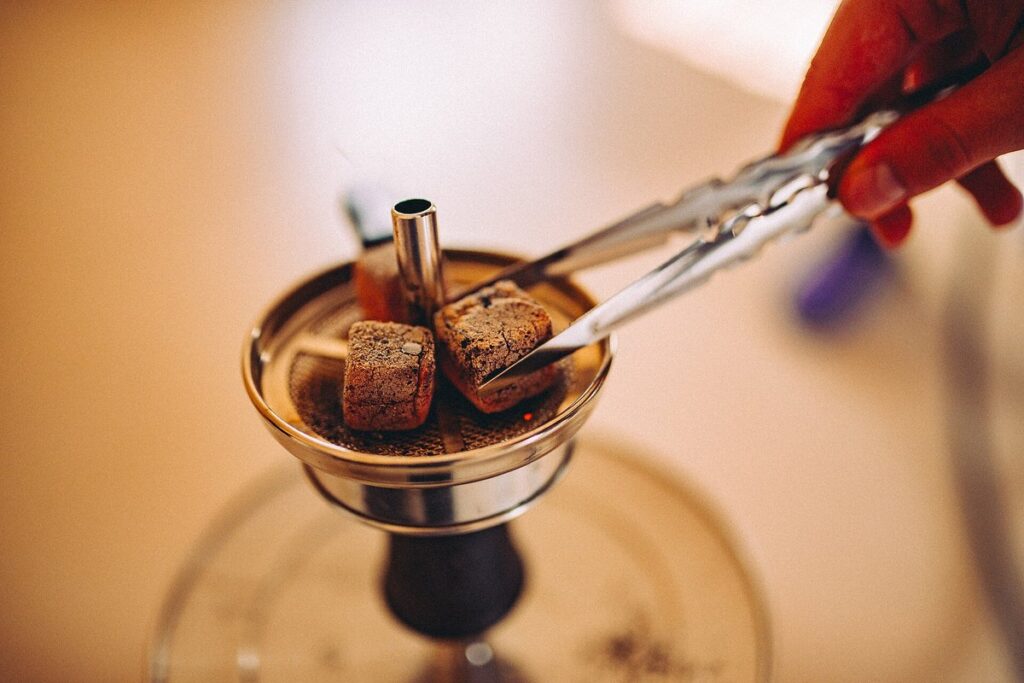
| Priority | Heat stability, low ash | Tight size tolerance, no sparks, no odour |
| Buyer | Grill and smoker market, restaurants | Hookah lounges and distributors |
| Failure mode | Ash clogging the fire basket | Cube variance, sparking, bitter taste |
Shisha buyers care about tolerance in millimetres and consistency tube to tube. BBQ buyers care about hours of steady heat per load. A supplier who cannot explain both is not a producer.
Details on the hookah specification are in our {L(‘shisha-charcoal-briquettes-supplier’,’shisha charcoal briquettes supplier’)} guide.
Ash Content and Moisture: What Buyers Should Verify
Two numbers decide whether a container earns repeat orders.
Ash content. Export benchmark is maximum 1.8 to 2.5%. Above 3% usually signals mixed raw material, incomplete carbonisation or a supplier blending in cheaper feedstock. In the shisha market, high ash shows up as heat fade on the bowl within thirty minutes. In barbecue, it shows up as a fire that dies halfway through a long cook because airflow is blocked.
Moisture. Maximum 5 to 6%. Moisture is dead weight in two senses: you pay freight on water, and every gram has to be driven off before the fuel reaches cooking temperature. Briquettes stored badly reabsorb moisture even after production, which is why inner packaging specification matters.
The Self-Heating Test (SHT) result is worth requesting alongside the COA. It tells you how the batch behaves in extended storage and transport, not just how it burns the day it was made.
Packaging and Private Label Options
Packaging is where a commodity becomes a brand, and it is usually the fastest way for an importer to build margin.
- Inner: 1 kg box with plastic lining, the standard for retail shisha and barbecue packs.
- Outer: master carton in 10 kg or 20 kg, or bulk PP mesh and woven bags for industrial buyers.
- Private label / OEM: custom artwork, logo printing, brand-specific carton sizes and inner box design.
- Labeling: destination-market compliance text, barcodes and language variants handled to your artwork file.
Private label removes the commodity comparison at the shelf. The buyer is no longer choosing between your charcoal and another pallet of charcoal; they are choosing your brand, and the margin follows.
Indonesia Coconut Charcoal Export: Ports, MOQ and Lead Times
The commercial framework for export from Indonesia:
- MOQ: one 20ft FCL container, approximately 14 to 15 tonnes depending on packaging. Private label and mixed-pack runs can start lower with confirmed specifications.
- Ports: FOB Tanjung Priok (Jakarta) or Talang Duku (Jambi). Choice depends on feeder availability and buyer preference.
- Terms: FOB and CIF.
- Documentation: MSDS, SHT, COA on request, plus the standard export document set for customs clearance at destination.
- Samples: available on request to test burning performance, ash content and preparation time.
We are a direct producer, which means specification, packaging and lead time are controlled at source rather than brokered. See the product page for the current specification sheet, or read the supplier profile for certification detail.
Frequently Asked Questions
What is the difference between coconut charcoal briquettes for BBQ and for shisha?
Shisha-grade cubes are smaller, denser and cut to tight tolerances (22 to 27 mm cubes) so they sit evenly on a bowl and burn 60 to 90 minutes. BBQ-grade coconut charcoal briquettes are larger, designed for 2.5 to 3+ hours of cooking heat with low ash.
What ash content should importers demand?
Maximum 1.8 to 2.5% is the export benchmark for quality coconut shell charcoal. Anything above 3% usually signals mixed raw material or incomplete carbonisation and will cost you repeat orders in the shisha market.
What is the MOQ for coconut charcoal briquettes from Indonesia?
Our standard minimum is one 20ft FCL container, approximately 14 to 15 tonnes depending on packaging. Private label and mixed packaging runs can start lower with confirmed specifications.
How long do coconut charcoal briquettes burn?
BBQ grade burns up to 2.5 to 3+ hours per load. Shisha cubes burn 60 to 90 minutes. The dense, uniform structure also lets a smoker hold low temperature for many hours using the snake or minion method.
Do coconut charcoal briquettes give food a coconut taste?
No. The shell is fully carbonised before pressing, so none of the original flavour compounds survive. They burn odourless and neutral, which means the smoke flavour comes from the wood chunks you add, not from the fuel.
Related Charcoal & Grilling Guides
- Grill Briquettes
- Lump Charcoal for Grilling
- Wood Chunks for Grilling
- BBQ Grill With a Smoker
- Best Gas Grills 2026
- Blues Hog Charcoal
- Shisha Charcoal Briquettes Supplier
- Charcoal Briquettes Supplier in Indonesia
- Coconut Shell Charcoal for BBQ
Product: Coconut Charcoal Briquettes — Export Grade for BBQ, Grill & Shisha