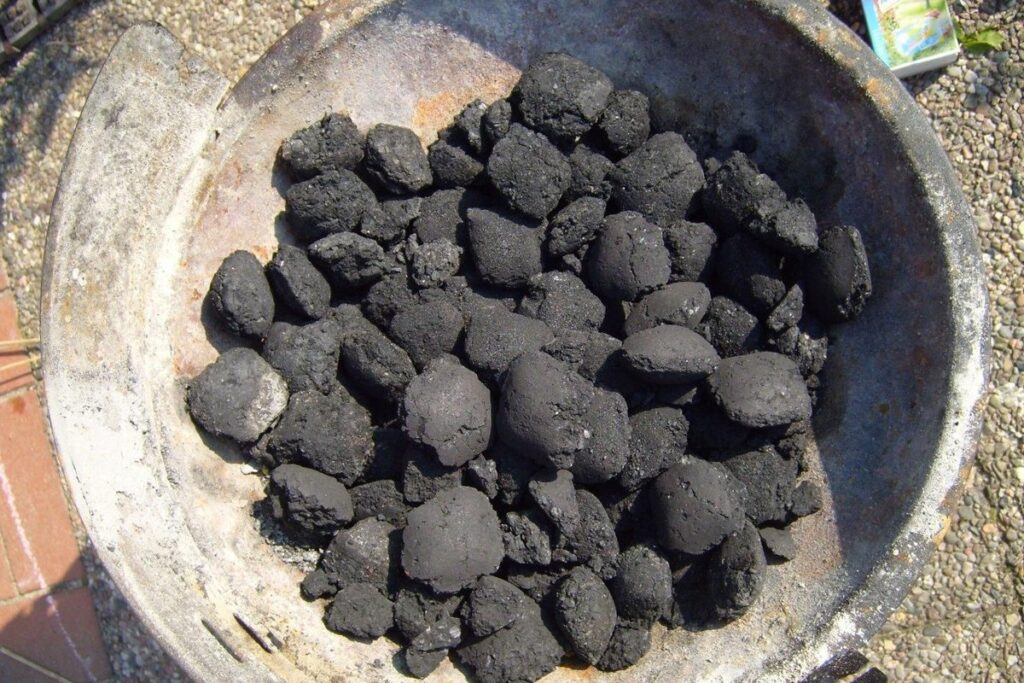
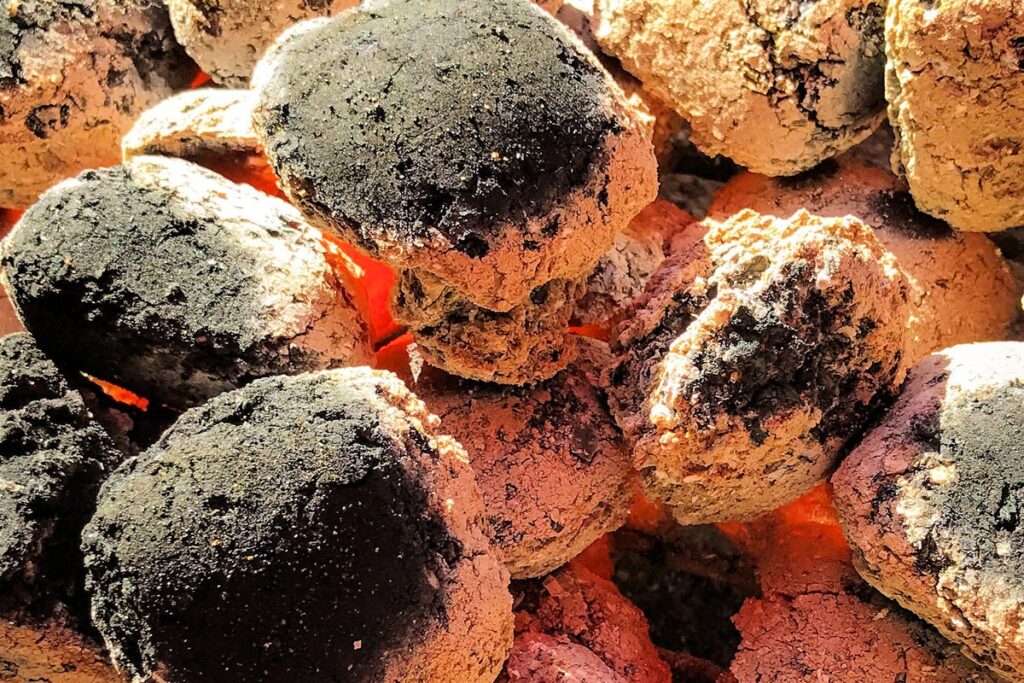
Private label charcoal briquettes are briquettes made by a supplier and sold under your brand, in your packaging, with your label. The supplier produces, packs and ships; you own the brand and answer for the label in your market. Projects run smoothly when specification, label content and brand ownership are agreed in writing before production starts.
This guide is for importers, distributors, procurement managers and shisha lounge groups in the Gulf, the wider Middle East and Europe who want to move from buying unbranded bulk briquettes to selling a product with their own name on it.
Key Takeaways
- Private label charcoal briquettes use a supplier’s existing product under your brand; OEM means the product is built to your own specification.
- Shape, size, inner and outer packaging, artwork and label language are points to discuss in a request for quotation, not options guaranteed on every order.
- Whoever places the product on the market is responsible for the label: local language, carbon monoxide warning and importer or supplier details.
- Approve physical samples and printed proofs in writing before mass production.
- Register the trade mark yourself in each destination market; the supplier does not own your brand.
- MOQ and price for private label charcoal briquettes are confirmed through a request for quotation, because they depend on the specification and packaging you choose.
Private label vs OEM: which model suits your brand
Buyers often use the two terms interchangeably, yet they lead to different projects. Under a private label arrangement you select a briquette the factory already makes, such as a cube for hookah use or a hexagonal briquette for barbecue, and the supplier packs it in your branded packaging. The specification remains the supplier’s.
Under an OEM arrangement you define the product itself: a mould size that is not in the catalogue, a non-standard pack format, or quality parameters you set and test against an agreed method. Expect trial batches and a longer lead time.
| Point | Private label | OEM |
|---|---|---|
| Product specification | Supplier’s standard product | Buyer’s specification, agreed in writing |
| Shape and size | Chosen from current production | Can go beyond the catalogue; needs mould trials |
| Packaging and label | Buyer’s brand and artwork | Buyer’s brand, sometimes a bespoke pack structure |
| Pre-production trials | Standard sample plus printed proof | Trial samples, possibly several rounds |
| Lead time | Generally shorter | Generally longer |
| MOQ and price | Confirmed through a request for quotation | Confirmed through a request for quotation |
For a first branded range, private label charcoal briquettes are the lighter route. You test demand with a proven product, then move to OEM once customers tell you what to change. To see which products could serve as a base, look at our coconut charcoal briquettes and the background in our coconut charcoal briquettes guide.
What to raise in your request for quotation
A quotation request for private label charcoal briquettes carries more detail than a bulk enquiry, because shape, print and packing all affect cost, timing and minimum quantities. The points below are subjects for discussion; availability is confirmed order by order, not promised in advance.
Shape and size
For private label charcoal briquettes, shape follows the end user. Hookah users in the Gulf are used to cubes and flat squares, while European barbecue shoppers tend to know pillow and hollow hexagonal shapes. State the shape and size you want and why, for example the bowl type your lounges use. If the shape is not on the supplier’s current lines, you have moved into OEM territory and should expect mould trials.
Inner and outer packaging
In private label charcoal briquettes, the inner pack is what the end customer handles: a small box, a sealed bag or a paper sack. The outer pack is the master carton that protects it on the export route from Indonesia. As an illustration only, a brand might choose a 1 kg inner box packed into a 10 kg master carton. That is an example, not our standard pack; the real format is agreed around your shelf space, your customers’ buying habits and how cartons stack in a 20-foot or 40-foot container.
Artwork and label language
With private label charcoal briquettes the buyer normally supplies the artwork (logo, colours, layout), and the supplier advises on print area, colour limits and where the batch code goes. Label language follows the destination. A bilingual design can cover several markets if each language carries the complete mandatory text.
To speed up the first reply, include the following in your opening message:
- Destination countries and sales channel (lounges, retail, wholesale, online).
- Base product and preferred shape.
- Planned inner and outer packaging, including materials.
- Artwork files, or photos of your existing branded packs.
- Label languages and any mandatory wording you already know about.
- Indicative first volume and your preferred Incoterms rule.
Labelling obligations in your destination market
In most markets a briquette label is also a safety document, read by customs officers, market surveillance inspectors and large retailers. Responsibility for compliance rests with the party placing the product on that market, which for private label charcoal briquettes is normally you as brand owner or importer. The supplier prints exactly what you approve.
Items that appear on almost every briquette label for the Middle East and Europe:
- Local language. Gulf markets generally expect Arabic text; European markets expect the official language of each country where the product is sold. Confirm the exact rules with your authority or a compliance adviser.
- Carbon monoxide warning. Burning briquettes give off CO, which has no colour or smell. The label should warn against use indoors or in unventilated spaces and explain how to put embers out safely.
- Responsible party. Name and address of the importer or brand owner in the market, plus the country of origin.
- Net quantity and batch code. Net weight in the units required locally and a batch code so complaints can be traced to a production date.
- Use and storage instructions. How to light, safe distance from flammable materials, and advice to keep the pack dry.
For barbecue briquettes sold in Europe, retailers often refer to EN 1860-2, the European standard for barbecue charcoal and charcoal briquettes. If your customers require test results to that standard, say so in your enquiry. Indonesian specification sheets may also cite SNI 01-6235-2000 for wood charcoal briquettes as a reference point.
Samples and artwork approval
With private label charcoal briquettes, a print error on thousands of cartons costs far more than one extra sample round. Lock the approval sequence in writing before production:
- Product sample. Briquettes from the line that will run your order, tested by you or a laboratory you choose. Moisture, volatile matter and ash can be checked using ASTM D1762-84.
- Digital proof. Final layout at actual size with the agreed colours.
- Printed proof. A physical pack where available, to check colour and warning legibility.
- Written sign-off. One email or document naming the artwork version, packaging material and product specification approved.
- Pre-shipment photos. Photos or video of finished goods and carton stacking before the container is sealed.
Keep every approved version with a number and a date. Our gallery shows products and working steps.
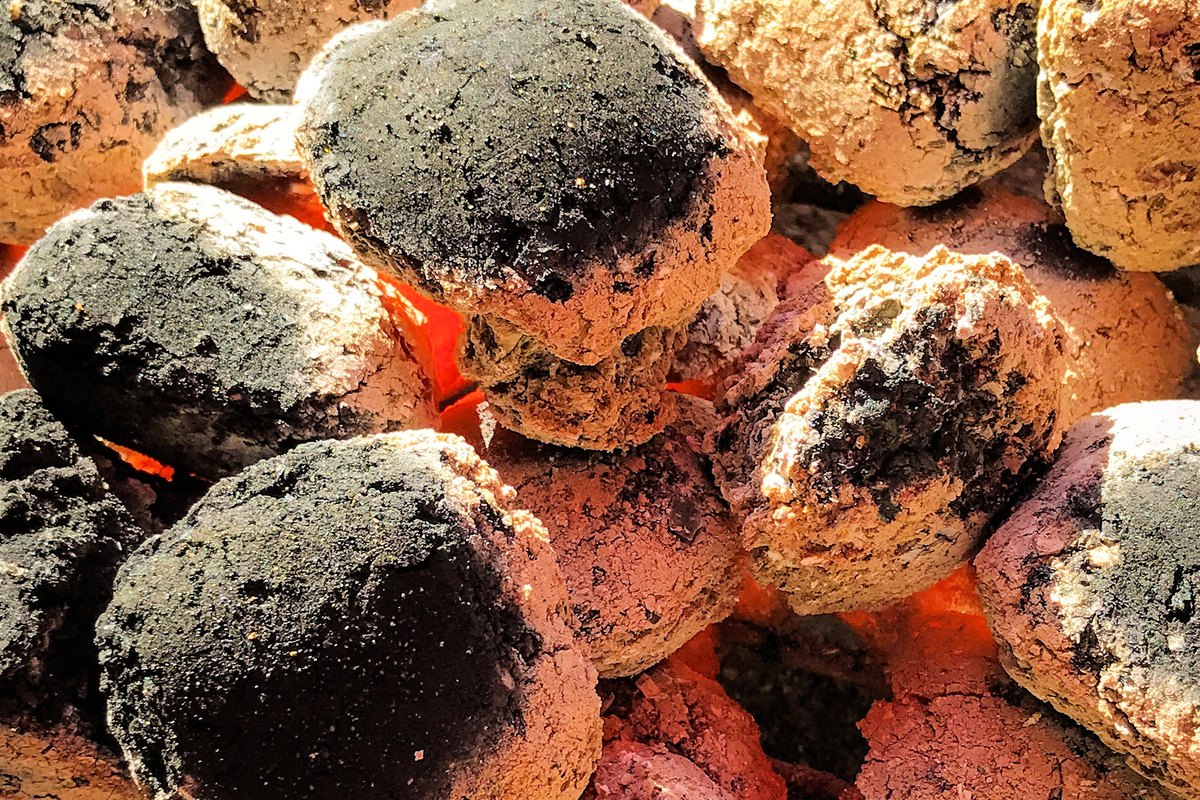
Protecting your brand: trade mark registration
The name on your private label charcoal briquettes belongs to you, and so does the job of protecting it. Without registration you have little to rely on if a competitor launches a similar name in your market.
Steps buyers commonly take:
- Search the trade mark register in each destination country before printing packaging.
- Register the mark in your company’s name where the product is sold. In the European Union an EU trade mark is filed with the EUIPO; for many other countries the Madrid System run by WIPO allows a single application covering several territories.
- Ask an intellectual property adviser to confirm the correct class of goods for charcoal and briquettes.
In the supply contract, state that the artwork, logo and brand name belong to the buyer, that the supplier uses them only for the buyer’s orders, and that surplus branded packaging is not sold to anyone else.
Workflow for private label charcoal briquettes, from quote to shipment
Each supplier has its own sequence, but a programme for private label charcoal briquettes with an Indonesian supplier usually follows these steps:
- Request for quotation. You send destination, base product, packaging and indicative volume. MOQ and price come back in a written quotation.
- Specification check. Both sides agree shape, size, packaging materials, label text and test methods.
- Samples and sign-off. As set out above, ending in written approval.
- Contract and deposit. The contract names the Incoterms 2020 rule (for example FOB, CFR, CIF or DAP), the schedule and the brand clauses.
- Packaging procurement and production. Branded packaging is printed first, then the briquettes are packed.
- Pre-shipment inspection. By your own team, a third-party inspection agent, or through photos and video from the supplier.
- Loading and shipment. Goods are loaded into a 20-foot or 40-foot container and documents are sent to you.
Two technical points are easy to miss at loading. Wooden pallets must comply with ISPM 15: heat treatment to a core temperature of 56 °C for at least 30 minutes, or methyl bromide fumigation, plus the IPPC mark. Under the IMDG Code, charcoal is listed as UN 1361, Class 4.2. The shipper and forwarder need to check whether the product is exempt on the basis of a self-heating test (special provision 925, test N.4 in the UN Manual of Tests and Criteria). Branding does not change these obligations.
Documents that travel with a branded order
The paperwork for private label charcoal briquettes is largely the same as for bulk orders, with the artwork approval added. The table shows what is usually requested and who prepares it.
| Document | Purpose | Prepared by |
|---|---|---|
| Quotation and contract | Fixes specification, Incoterms rule, schedule and brand clauses | Supplier and buyer |
| Specification sheet and artwork approval | Records the approved product and label version | Supplier, signed off by buyer |
| Commercial invoice and packing list | Value of goods and pack breakdown | Supplier |
| Bill of lading | Proof of shipment and document of title | Shipping line via forwarder |
| Certificate of origin | Origin of goods for import duty purposes | Issuing authority in Indonesia, on the exporter’s application |
| Safety data sheet and test reports | Safety and quality information where the importer requires it | Supplier or laboratory; availability confirmed at quotation stage |
| ISPM 15 pallet treatment certificate | Evidence that wooden pallets were treated | Pallet provider or fumigation company |
Ask any supplier about additional certificates, such as quality management or halal statements, and request the certificate number and validity date. If your range is aimed at lounges, see our shisha charcoal briquettes page; for barbecue retail, see grill briquettes.
FAQ
What is the difference between private label charcoal briquettes and OEM?
Private label charcoal briquettes use the supplier’s standard product, packed under the buyer’s brand, packaging and label. OEM means the buyer also sets the product specification, such as a shape, size or quality parameter outside the catalogue. Private label is usually quicker to launch because no new mould trials are needed, while OEM takes several sample rounds and a more detailed specification sheet.
What is the minimum order for my own brand of briquettes?
A minimum for private label charcoal briquettes cannot be quoted without the order details, because it depends on briquette shape, inner pack type, carton material and the number of artwork versions. Custom printed packaging often has its own minimum run at the printer. MOQ and price are confirmed through a request for quotation once the supplier has your destination, base product, packaging plan and indicative volume.
Who is responsible for the label in the destination country?
The party placing the product on the market, normally the brand owner or importer, must make sure the label meets local rules on language, carbon monoxide warnings, net quantity and importer details. The supplier supports the printing side and makes sure the printed text matches the artwork you approved. Check current requirements with your national authority or a compliance adviser before you print.
Can the supplier sell my brand to other buyers?
It should not, and the contract should say so plainly. State that the logo, brand name and artwork belong to the buyer, are used only for the buyer’s orders, and that surplus branded packaging will not be sold to third parties. Stronger protection comes from registering the trade mark in your company’s name in each destination market, and in Indonesia if needed.
Do I need samples before mass production?
Yes. A product sample lets you test the briquettes yourself, for example moisture and ash using ASTM D1762-84, and a printed proof shows colour and warning legibility before thousands of packs are produced. Ask for written sign-off that names the artwork version and specification. That document becomes the reference for pre-shipment inspection and for every repeat order you place.
Conclusion
Building your own briquette brand with an Indonesian supplier starts with the choice of model: private label to reach the market faster with a proven product, or OEM once you know exactly what your customers want changed. After that, the real work lies in a label that is lawful in your market, samples approved in writing and a trade mark registered in your name. Those three points separate a lasting range of private label charcoal briquettes from a one-off sticker change.
Gather your destination details, base product, packaging plan and artwork, then send them as a request for quotation. To learn more about us first, visit about us or our contact page.
Request a quote via export WhatsApp +62 812-7444-4459, call the office on +62 813-6666-888, or email ade@agrobumisumatera.co.id. Price and MOQ are confirmed in a written quotation based on the specification you send.