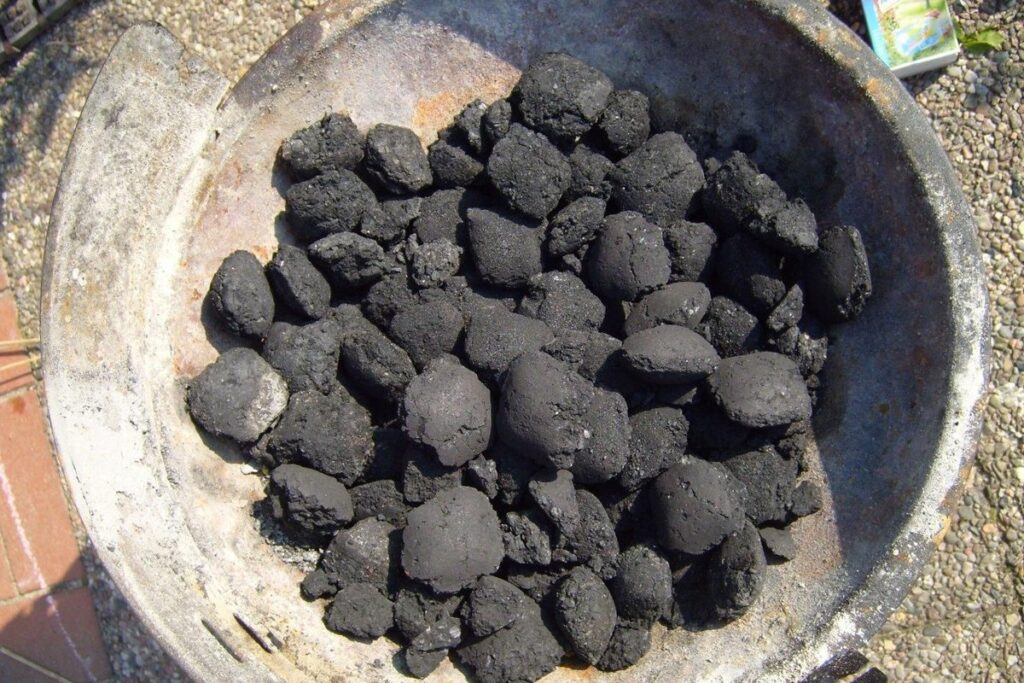
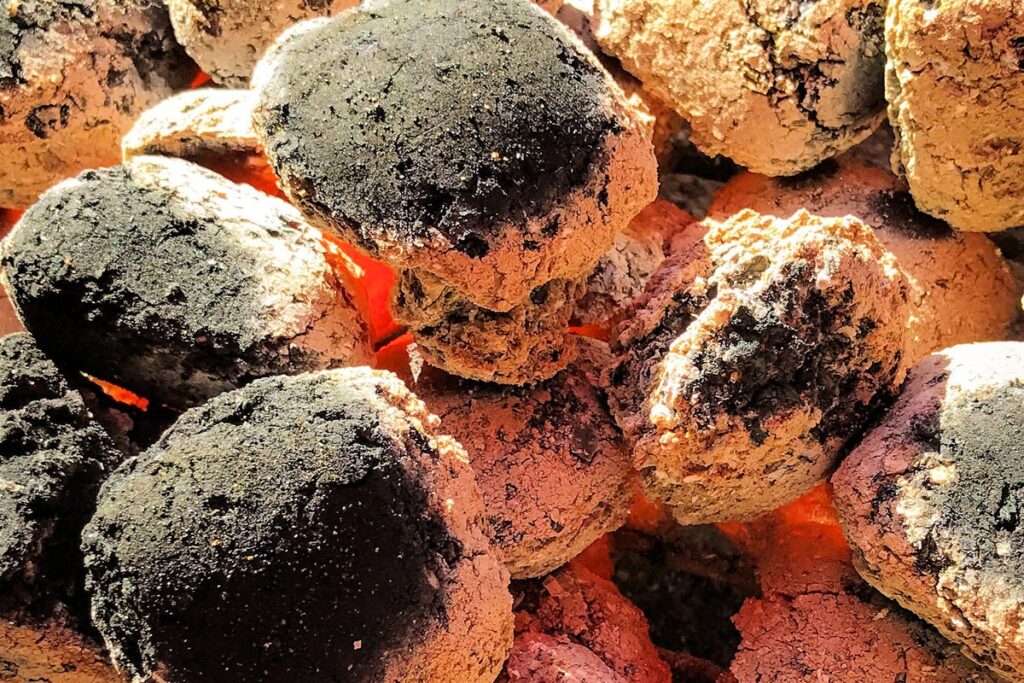
How to store charcoal briquettes properly comes down to one rule: keep humid air away from them from the moment they leave the dryer until they are lit. Stack them on pallets, leave space at the walls, keep air moving, keep packs sealed and sell the oldest stock first. Briquettes that have taken on water light slowly, smoke, spark and crack.
This guide is for importers, distributors and procurement managers in the Gulf and Europe, and for hotel and restaurant kitchen managers and shisha lounge owners. It deals with water only: how it gets in, how to spot it, how to keep it out and how to measure it. Reading an ash test report is a separate subject and is not covered here.
Key Takeaways
- Charcoal is porous and hygroscopic, so a dry briquette keeps drawing moisture from the air until it reaches balance with the room around it.
- Damp stock can be spotted without instruments: extra weight, a dull knock, white spots, a musty smell and slow ignition.
- In the warehouse, the essentials are pallets, a gap at the walls, steady airflow and packaging that stays closed.
- In the container, the main threat is “container rain”: condensation dripping from the roof when day and night temperatures differ sharply.
- A cold container opened in a warm, humid warehouse can make the cargo sweat, so let pallets acclimatise before unwrapping.
- A simple weigh-and-dry test is enough for routine monitoring; contract figures should come from a laboratory using ASTM D1762-84.
Why charcoal briquettes absorb moisture
Charcoal is made by heating organic material with little oxygen until water and volatile matter are driven off. What remains is a carbon skeleton full of fine pores that take up odours and water vapour alike. This is hygroscopy: the material pulls water molecules from the air.
Coconut shell briquettes are commonly bound with starch such as tapioca, which also attracts water and, if damp for long, grows mould. A briquette that left the kiln dry keeps absorbing moisture until it balances with the relative humidity of the room. A coastal Gulf warehouse in late summer or an unheated European shed in winter can push that balance well above factory level.
Part of the heat then goes into boiling off water, so the briquette takes longer to form an even ember and burns cooler. Steam escaping from the pores can crack the briquette or make it spark, which is the most common complaint from shisha customers. Smoke and smell increase as well. This can happen to a well-made product; it is a storage problem.
How to tell when briquettes have picked up moisture
Take a few briquettes from different parts of the stack (top, middle, near the floor and against the wall) and check for the following:
- Sound. Dry briquettes knocked together ring clearly; damp ones sound dull.
- Weight. Pieces from the bottom or wall side feel heavier than those from the centre.
- Surface. White or greenish mould spots, or a cold, clammy feel.
- Smell. A musty odour, like wet cardboard, when the inner bag is opened.
- Packaging. Soft, warped or water-stained outer cartons; condensation on the inside of the inner film.
- Strength. Edges crumble, or briquettes break when dropped from a short height.
- Burning. Slow ignition, sparking, heavier smoke and cracking halfway through the burn.
If two or three signs appear in one sample, set that pallet aside and run the weigh-and-dry test below before selling it on.
How to store charcoal briquettes in a warehouse
Briquettes spend most of their life in a warehouse, at origin and again at destination. If you are working out how to store charcoal briquettes on your own premises, three things decide the outcome: what is under the stack, what is next to it, and how the air moves.
Pallets and the floor
Never put cartons or sacks straight on a concrete floor. Concrete holds ground moisture and cools at night, so the bottom layer is always the first to go damp. Use dry wooden or plastic pallets. A pallet left out in the rain passes its water to the packaging, so check pallets before use and cover the deck with dry board or plastic sheet.
Distance from walls and roof
External walls are where condensation forms when the temperature drops, and rainwater often seeps in where the wall meets the floor. Leave a walkable aisle between stacks and walls so air can pass and leaks are seen before they reach the stock. Keep stacks clear of the roof structure and of leaking gutters.
Airflow without letting the weather in
Still air saturates quickly; cross-ventilation, wall fans or roof ventilators keep it moving. Keep loading doors closed during heavy rain or fog. Store briquettes away from anything with a strong smell such as fertiliser, diesel or paint, because the pores take up odours as readily as water.
Storage in hotel kitchens, restaurants and shisha lounges
In a kitchen the moisture comes from stockpots, dishwashers, sinks and floors mopped every night. A dry store behind the kitchen is far safer than a shelf next to the range. Keep the main stock in the dry store and bring into the kitchen only what one shift will use. Briquettes for grilling and for shisha have different requirements; our grill briquettes page covers the grilling side.
In shisha lounges, customers notice damp coals immediately through sparks and smell. Keep boxes in a closed cupboard away from ice machines and air-conditioning units, and do not leave an open box on the counter all evening. If you buy cubes through a shisha charcoal briquettes supplier, ask for smaller inner packs so each bag is finished soon after opening.
Keeping the load dry in the container
A sea voyage from Sumatra to the Gulf or to a European port crosses several climate zones. Inside a steel intermodal container, the air sealed in at loading carries moisture from a tropical warehouse. By day the air warms and absorbs vapour from cargo and pallets; at night or in cooler waters the steel roof cools first, and the vapour condenses and drips onto the top layer. This is known as container rain or container sweat. A 20-foot container and a 40-foot container are both affected.
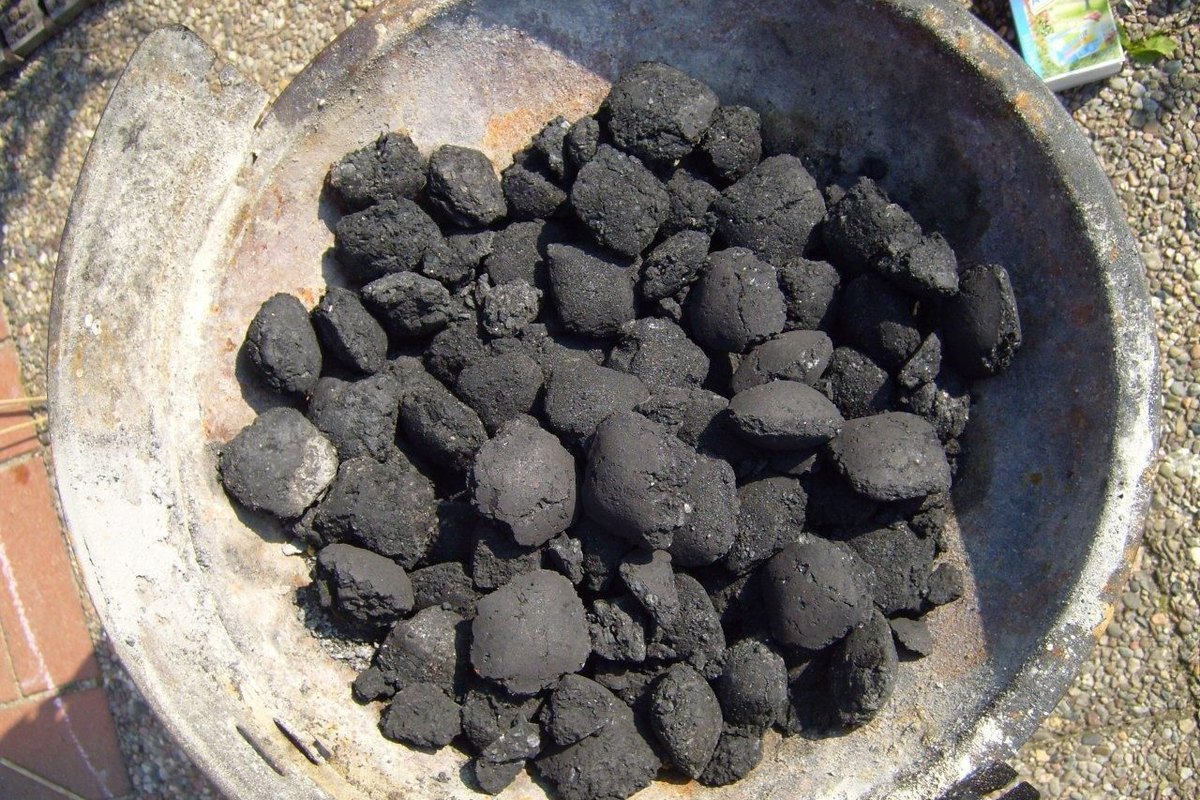
Measures commonly used by exporters and forwarders:
- Inspect the empty box. Reject units with a wet floor, a musty smell, rust holes, or daylight visible from inside with the doors closed.
- Container desiccants. Hang desiccant strips or large absorbent bags on the side walls and near the doors before sealing. Ask the forwarder what type and quantity suit the container size and transit time.
- Kraft paper or board. Line the floor and cover the top of the load so that drips do not land directly on the cartons.
- ISPM 15 pallets. Wooden export pallets must comply with ISPM 15 from the IPPC: heat treatment to 56 °C at the wood core for at least 30 minutes (or methyl bromide fumigation) and the IPPC mark. Pallets must also be dry at loading.
- Load in dry weather and close the doors as soon as loading is finished; a half-loaded container should not stand open overnight.
Charcoal is also listed in the IMDG Code as UN 1361, class 4.2 (substances liable to spontaneous combustion). The shipper should check with the forwarder whether the product is exempt on the basis of a self-heating test (special provision 925, test N.4 in the UN Manual of Tests and Criteria), and the safety data sheet should match that outcome. More on how we handle export enquiries is on our charcoal briquettes supplier in Indonesia page.
Receiving and rotating stock: arrival checks and FIFO
Destination warehouses add a risk that is easy to miss. Cargo arriving from cooler waters may be colder than the warehouse air, and unwrapping it at once in a warm, humid building lets moisture condense on it, like a cold glass on a summer day. Where possible, move pallets inside still wrapped and let them reach room temperature before opening the stretch film.
On arrival, photograph the container interior as the doors open and sample any stained cartons before the load is mixed with existing stock; a supplier or insurer will ask for these records if a claim follows.
FIFO (first in, first out) means the stock that arrived first leaves first. It often fails because new pallets go in front of old ones, leaving the oldest stock in a damp corner. To make FIFO work:
- Lay out aisles so every stack can be reached without moving another.
- Write the date received in large figures on two sides of each stack, not only in the system.
- Separate the receiving and dispatch areas; new stock always goes in from the back.
- Keep one sample per lot and recheck it for signs of damp every month.
- Record the lot number on each outgoing delivery so customer complaints can be traced back to a date and location.
Checking moisture content: quick test versus laboratory
Our coconut charcoal briquettes guide covers specifications in general. Moisture content is the weight of water as a share of the sample weight. For routine monitoring a weigh-and-dry test gives a usable picture; for contracts, certificates of analysis or quality disputes the figure must come from a laboratory.
A simple warehouse test
You need a reasonably precise digital scale and a heat-proof tray. Sample several points in the stack, break the pieces roughly, weigh them and dry them in a hot, dry room or in a drying oven with a controlled, supervised temperature until two weighings in a row show no further loss. Then calculate: (initial weight minus dry weight) divided by initial weight, times 100%. As an illustrative example, a 200 gram sample that drops to 190 grams has a moisture content of about 5%. The method is not standardised, so use it to compare pallets and lots, not as an official figure.
Laboratory testing
Laboratories commonly use ASTM D1762-84, the method for chemical analysis of wood charcoal covering moisture, volatile matter and ash. For reference, the Indonesian standard SNI 01-6235-2000 for wood charcoal briquettes sets a maximum moisture content of 8%. European barbecue buyers will also meet EN 1860-2, the European standard for barbecue charcoal and briquettes. These are reference standards, not figures for any particular product. Ask your supplier which method was used and where and when the sample was taken, since moisture at loading can differ from moisture on arrival.
| Aspect | Weigh-and-dry test | Laboratory test |
|---|---|---|
| Equipment | Digital scale, tray, dry room or drying oven | Laboratory oven, analytical balance, desiccator |
| Method | Not standardised; kept consistent by your own team | ASTM D1762-84 or the method named in the contract |
| Purpose | Comparing pallets, lots and seasons | Certificates of analysis, contracts, quality claims |
| Precision | Rough, enough to flag a problem | Measured and repeatable by another laboratory |
| When to use | Routinely, for example on every arrival and monthly | Before shipment or when a dispute arises |
FAQ
How long can charcoal briquettes be stored?
Briquettes have no expiry date in the way food does, because carbon does not decay. What limits storage life is moisture. Sealed, on pallets, in a dry and ventilated warehouse, they keep for a long time. In a leaking building or on a bare concrete floor, damage can appear within weeks. FIFO rotation and monthly checks matter more than a nominal shelf life.
Can damp briquettes still be used?
Briquettes that are only slightly damp can usually be used after airing in a dry room or drying in an open tray in the sun until they ring clearly when knocked together. Do not dry them in a kitchen oven or on a hob without supervision. Mouldy, musty or crumbling briquettes should not be used for shisha, because customers will notice.
Are small silica gel sachets enough for a container?
No. Sachets from electronics packaging are far too small; the briquettes, pallets and air in the box hold much more water vapour. Use purpose-made container desiccant strips or large bags hung on the walls, plus kraft paper on the floor and over the load. The right quantity should be agreed with your forwarder based on container size and route.
How to store charcoal briquettes at a restaurant or lounge with little space?
Keep the main stock in sealed cartons in the driest room available, on a shelf or pallet rather than the floor, and away from sinks, dishwashers, ice machines and air-conditioning units. Bring only one shift’s supply to the work area in a lidded metal or plastic container. Close opened packs straight after use.
What moisture limit do standards set for briquettes?
The Indonesian standard SNI 01-6235-2000 for wood charcoal briquettes sets a maximum moisture content of 8%, alongside limits for ash and calorific value. European buyers may also refer to EN 1860-2. These are references, not product figures. To know the moisture of a particular lot, ask the supplier for a laboratory report naming the method, such as ASTM D1762-84, and the sampling date and location.
Conclusion
Briquettes that leave the factory in good condition can still be spoiled in a warehouse, a kitchen or mid-ocean if moisture is allowed in. How to store charcoal briquettes safely comes down to four habits: pallets and a gap at the walls, packs that stay sealed, containers that are inspected and fitted with desiccants, and FIFO rotation that is actually followed. A weigh-and-dry test helps your team catch problems early, while official figures should come from a laboratory using a named method.
Product details are on our coconut charcoal briquettes page, and photos of our process are in the gallery. Questions about packaging, test documents and load preparation can be sent through our contact page.
To request a quote, with MOQ and pricing confirmed per order, contact our export WhatsApp +62 812-7444-4459, our office on +62 813-6666-888, or email ade@agrobumisumatera.co.id.