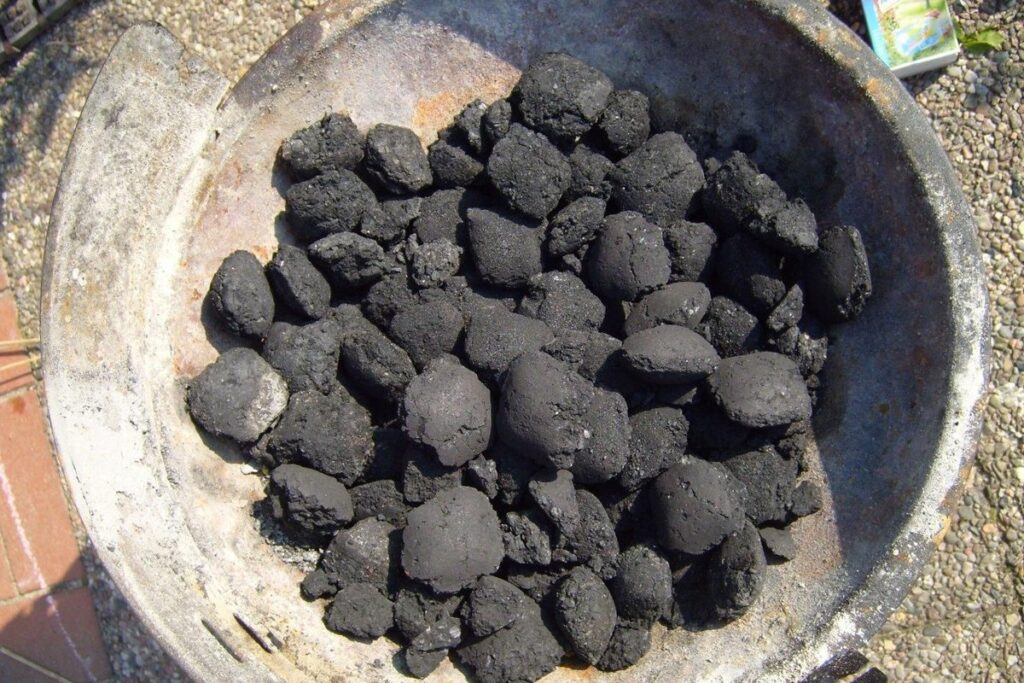
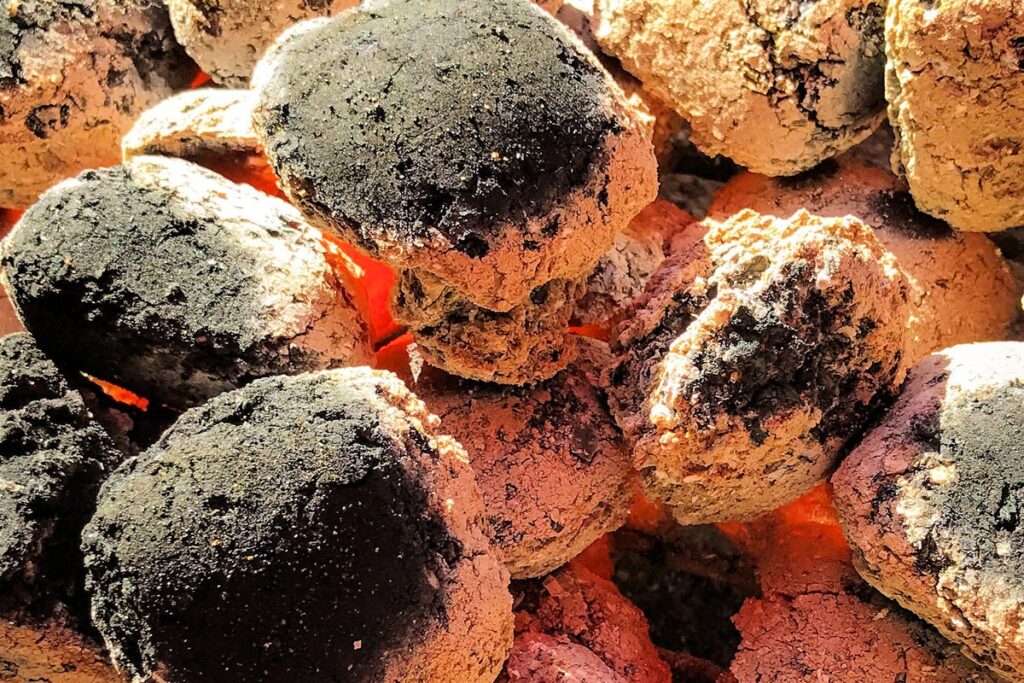
Briquettes vs wood charcoal comes down to how each fuel is made. Coconut shell briquettes are pressed from finely ground shell charcoal and a binder, so every piece has the same size and density. Wood charcoal, often sold as lump, is carbonised timber left in its natural shape, so pieces vary from fist-sized chunks to dust. That single difference explains most of what buyers notice in use: briquettes are slower to light but hold a steady, low-smoke heat for longer, while wood charcoal lights fast, burns hot and is gone sooner.
This comparison is written for importers, distributors, procurement managers in hospitality, and shisha lounge owners in the Middle East and Europe who are deciding which fuel to stock or specify. If you already sell wood charcoal and are considering coconut briquettes, the table and buyer checklist below can go straight into an internal brief.
Key Takeaways
- Coconut shell briquettes are made from a by-product of the coconut food chain; wood charcoal is made from felled trees or timber residues.
- Briquettes are uniform, so heat can be portioned by the piece; wood charcoal varies from bag to bag.
- Wood charcoal lights faster; briquettes take longer but give a longer, more even burn.
- Well-made coconut briquettes produce very little smoke or odour, which is why shisha lounges and indoor kitchens prefer them.
- Both fuels absorb moisture, so dry storage and sound packaging protect quality all the way to the end user.
- For wholesale orders, ask for a written specification, laboratory reports and samples before committing to a container.
Raw material and sustainability: coconut shell versus timber
Coconut shell is what remains once the flesh has been taken for copra, coconut milk or oil. In producing regions of Indonesia, shells pile up at processing sites and on farms, and much of that material would otherwise be burnt in the open or discarded. Turning it into charcoal and then briquettes uses material that already exists. No extra trees are cut, and supply follows the coconut harvest rather than a logging cycle.
On the wood side of briquettes vs wood charcoal, the fuel starts with trunks and branches. The timber may come from natural forest, plantations, sawmill offcuts or orchard clearance, and a single bag can mix several species from several sources. European retailers and Gulf hospitality groups increasingly ask where the wood came from in supplier audits.
From a sourcing and sustainability point of view, briquettes vs wood charcoal differ in three practical ways:
- Feedstock. Coconut shell is a food by-product. Wood is a primary material that has to be harvested.
- Traceability. Shell can be traced to a coconut-growing district. Wood charcoal needs timber origin documents to be traceable, and those are not always available further down the chain.
- Certification questions. With wood charcoal, buyers usually ask whether the timber carries a forest management certification such as FSC. With coconut briquettes, the questions move to shell origin, binder type and test results. In both cases, ask the supplier which documents they can actually provide, and request copies rather than statements.
How each fuel is made, and why it matters
Both fuels begin with pyrolysis: organic material is heated with limited oxygen until water and volatile matter are driven off, leaving mostly carbon. The paths split after that, and the split decides how the fuel behaves on the grill or in the bowl.
The wood charcoal route
Timber is loaded into a kiln or pit, burnt slowly and allowed to cool. The charcoal is then bagged without further shaping. Piece size follows the original wood, and density follows the species: hardwoods give heavier, longer-lasting pieces, softwoods give light pieces that burn out quickly. Our page on lump charcoal covers that product in more detail.
The coconut briquette route
Shells are carbonised first. The shell charcoal is then milled, sieved, mixed with a binder (commonly tapioca starch) and water, and pressed by machine into cubes, bars or hexagonal shapes. The pressed pieces are dried until their moisture falls to a stable level. Milling and pressing are what give briquettes a consistent size, density and weight per piece. Background on the raw material and its use on the barbecue is on our coconut shell charcoal BBQ page.
In Indonesia, the national reference for charcoal briquettes is SNI 01-6235-2000, which sets a maximum moisture content of 8%, a maximum ash content of 8% and a minimum calorific value of 5,000 cal/g. These are threshold values in a published standard, not claims about any one product, and they are useful as a benchmark when you read laboratory reports from any supplier.
Briquettes vs wood charcoal at a glance
The table summarises the qualitative differences buyers ask about most often. It describes general behaviour, not the test result of any brand or shipment.
| Aspect | Coconut shell briquettes | Wood charcoal (lump) |
|---|---|---|
| Raw material | Coconut shell, a food by-product | Timber trunks and branches |
| Shape | Cubes, bars or hexagons of uniform size | Irregular pieces, large and small mixed |
| Lighting | Slower; needs a chimney starter, gas or electric burner | Fast; paper and kindling are usually enough |
| Heat pattern | Rises gradually, then stays steady for a long time | Heats quickly, falls away quickly |
| Smoke and odour | Very little when properly carbonised and dried | Some smoke at the start, noticeable wood aroma |
| Sparking | Rare | Possible, especially with under-fired pieces |
| Ash | Fine ash that tends to hold the shape of the piece | Usually less ash, but more fines and dust in the bag |
| Portioning | Easy to count by the piece | Hard to portion; needs weighing or guesswork |
| Typical use | Shisha, low-and-slow BBQ, restaurants with long service | Quick high-heat grilling, casual and one-off use |
Shape and consistency
Consistency is the main reason professional kitchens move to briquettes. When each piece gives roughly the same heat as the next, a chef can set a standard load for a service and a lounge manager can set a standard number of pieces per bowl. With wood charcoal, that standard shifts from bag to bag.
Lighting
Wood charcoal has more volatile matter and more open structure, so it catches quickly. Coconut briquettes are denser and need longer on a chimney starter, gas ring or electric burner before the whole surface glows. Once lit, they rarely need topping up within a session.
Flame, smoke and odour
A fully carbonised, well-dried coconut briquette glows with little visible flame and almost no smoke. Wood charcoal, especially if carbonisation was incomplete, still holds volatiles that come off as smoke and wood aroma. Some cooks value that aroma for certain meats. In enclosed dining rooms and in hookah service, smoke and odour are a problem rather than a feature.
Whatever the fuel, burning charcoal produces carbon monoxide. Use it only where ventilation is adequate, and never in a sealed room.
Ash
Pure wood charcoal generally leaves less ash than briquettes because it contains no binder. Briquette ash is fine and often keeps the outline of the piece until it is fully spent. In a shisha bowl that is useful, because the ash can be tapped off cleanly. Ash content still needs checking in a lab report, since shell contaminated with sand or soil raises it.
Which fuel suits which use
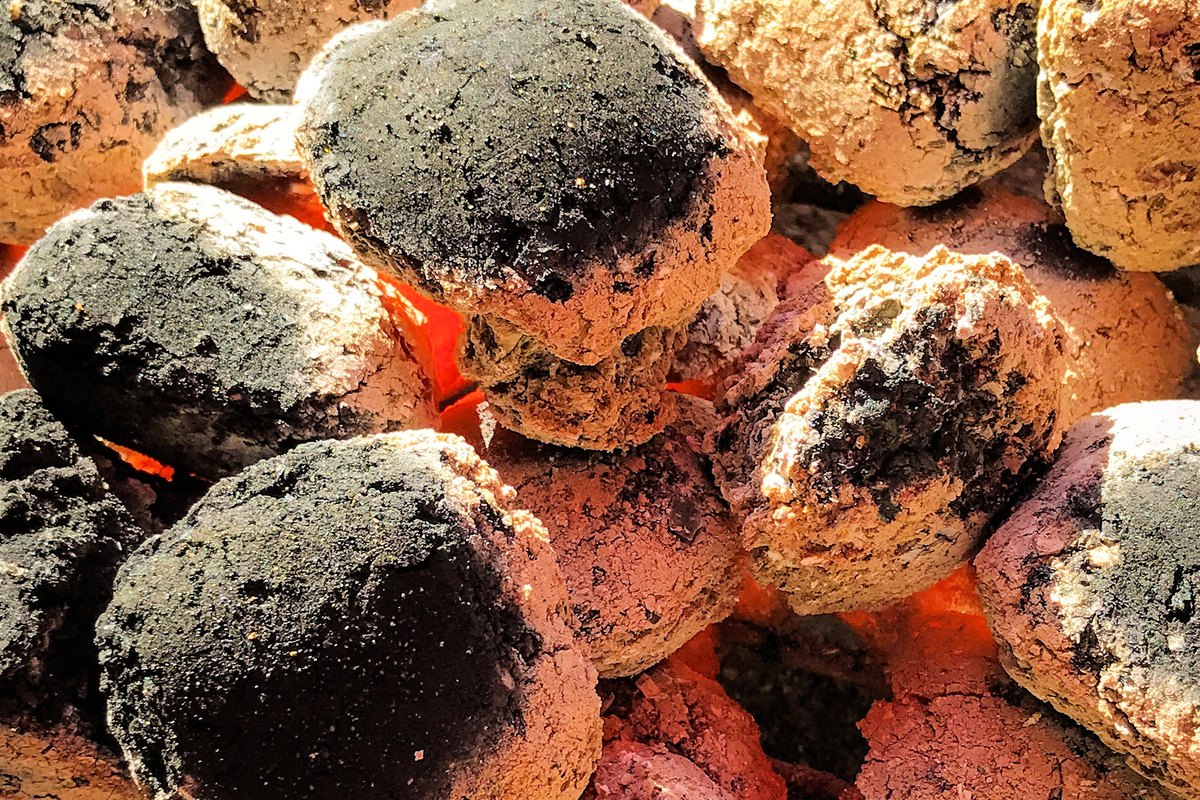
In the briquettes vs wood charcoal choice, no single fuel suits every customer. The better question is which one matches the way a kitchen or lounge actually works.
- Low-and-slow barbecue and smoking. Long cooks need stable heat. Briquettes do well here because the bed lasts without frequent refuelling. Our grill briquettes page covers shapes made for this use.
- Shisha lounges. Operators need charcoal with no odour, no sparks and ash that does not fall into the tobacco. Wood charcoal is rarely used for this. Lounge and distributor requirements are discussed on our shisha charcoal supplier page.
- Restaurants and hotel kitchens. Steak houses, kebab grills and seafood restaurants with long service hours benefit from a fuel that lasts through a shift and makes cost per cover easier to calculate.
Storage and shipping: both fuels dislike moisture
Charcoal is hygroscopic: it takes up water vapour from the air. Damp charcoal is harder to light, smokes more and, in the case of briquettes, can become crumbly at the surface. With wood charcoal, moisture damage is easy to miss because the pieces are irregular anyway. With briquettes, it shows as cracked or softened faces.
Storage practice that applies to both:
- Keep stock on pallets, off the floor and away from walls.
- Use a dry, well-roofed warehouse with air circulation, away from wash areas and wet kitchens.
- Leave inner packaging sealed until use, as it protects briquettes from humid air.
- Rotate stock on a first-in, first-out basis.
Three international rules matter for export shipments. First, wooden pallets in the container must comply with ISPM 15: the wood is heat-treated so that its core reaches 56 °C for at least 30 minutes (or fumigated with methyl bromide) and carries the IPPC mark. Second, under the IMDG Code, charcoal is listed as UN 1361, class 4.2, a substance liable to spontaneous combustion. The shipper and forwarder should check whether the product qualifies for exemption through self-heating testing (special provision 925, test N.4 of the UN Manual of Tests and Criteria). Third, charcoal must be cooled and stabilised before packing so that it does not heat up inside a 20-foot or 40-foot container during the voyage.
What wholesale buyers should check
For importers and distributors, understanding briquettes vs wood charcoal is only the first step. The decision rarely rests on a single test burn. What matters is whether quality repeats from one shipment to the next and whether the documents are in order. Use the list below when you approach suppliers:
- Written specification. Size, shape, binder type and the quality parameters promised, in one document.
- Laboratory reports. Ask which method was used. ASTM D1762-84 is the usual method for chemical analysis of wood charcoal (moisture, volatile matter, ash). For European markets, buyers often refer to EN 1860-2, the standard for barbecue charcoal and charcoal briquettes.
- Pre-shipment samples. Test samples in your own equipment, and ask the supplier to retain reference samples from the same batch.
- Origin and compliance documents. Ask about the certificate of origin, safety data sheet and any certifications the supplier holds, and request copies.
- Packaging and branding. Agree inner and outer packaging early (for example, 1 kg inner bags in a 10 kg carton) and whether private label is possible.
- Trade terms. Agree which Incoterms 2020 rule applies, such as FOB, CFR, CIF or DAP, so cost and risk are clear at each stage.
- Minimum order and price. Both are confirmed through a request for quotation, based on specification and destination.
For an overview of how an Indonesian export supplier works, see our charcoal briquettes supplier in Indonesia page. Our full range is on the products page, and photos of production and packing are in the gallery.
When wood charcoal still makes sense
Briquettes have clear advantages for professional use, but wood charcoal keeps its place. It suits operations that need high heat for a short window, such as a grill that is busy for two hours in the evening. It suits cooks who want wood aroma on the meat.
The risk with wood charcoal is how much quality varies. Bags heavy with fines, under-fired pieces that smoke, and damp wood that sparks all add hidden cost: more fuel wasted, more smoke complaints and heat that is hard to control. If your customers raise those complaints often, trialling coconut briquettes is a reasonable next step. Start with part of the volume and decide on usage records, not first impressions.
FAQ
What is the most noticeable difference between briquettes vs wood charcoal in use?
The heat pattern. Wood charcoal lights quickly and gets hot fast, but the bed shrinks soon and needs frequent topping up. Coconut shell briquettes take longer to be ready, then give steady heat for longer with far less smoke. For kitchens and lounges that run all day, that steadiness makes portioning easier and cuts the amount of fuel wasted.
Are coconut shell briquettes more sustainable than wood charcoal?
On raw material, yes: coconut shell is a by-product of the food chain, so no trees are felled specifically to make briquettes. Wood charcoal comes from trunks and branches, and the timber origin is often hard to trace. Even so, any sustainability claim should be backed by supplier documents, such as a raw material description, a binder declaration and an independent test report.
Why are briquettes harder to light than wood charcoal?
Briquettes are pressed from fine charcoal, so they are dense, with fewer air pockets and little volatile matter. Flame therefore takes longer to spread across the surface. Use a chimney starter, gas ring or electric burner until the pieces glow evenly. Avoid scented lighter fluid, particularly for shisha, because the smell can carry into food or tobacco.
Which fuel produces less ash?
Pure wood charcoal usually leaves less ash because it has no binder. Briquettes leave fine ash that tends to hold the shape of the piece, so it is easy to remove and does not scatter. As a formal reference, SNI 01-6235-2000 sets a maximum ash content of 8% for charcoal briquettes. Ask the supplier for a lab report on the batch you are buying.
How should importers store briquettes and wood charcoal in bulk?
Keep stock in a dry, well-roofed warehouse, on pallets, away from walls and heat sources. Leave inner packaging sealed until use, because charcoal absorbs moisture from the air. Rotate stock first in, first out. For export, make sure pallets comply with ISPM 15 and that the charcoal has been cooled and stabilised before it is packed into the container.
Conclusion
Briquettes vs wood charcoal is, in practice, a choice between speed and steadiness. Wood charcoal wins on fast lighting and wood aroma and suits short, high-heat use. Coconut shell briquettes win on uniformity, long and even heat, minimal smoke and a raw material that is easier to trace, which makes them the stronger fit for shisha, low-and-slow barbecue, hospitality kitchens and wholesale programmes that need repeatable quality.
A sensible next step is to define your customers’ main use, request a specification and lab reports, and compare samples in your own equipment. Product details are on our coconut charcoal briquettes page.
For specifications, samples, minimum order quantities and prices, request a quote via export WhatsApp +62 812-7444-4459, call our office on +62 813-6666-888, or email ade@agrobumisumatera.co.id. You can also use the form on our contact page.