Lump charcoal for grilling is the fuel most people picture when they think of barbecue: irregular black chunks, a chimney of flame, and a fierce heat within fifteen minutes. It earns that reputation honestly, and it also has limits that no amount of technique fixes.
This guide covers how lump charcoal behaves, where it beats briquettes, where it loses, and how to combine both fuels so a single cook gets fast heat and steady heat without compromise.
Daftar Isi
ToggleWhat Is Lump Charcoal for Grilling?
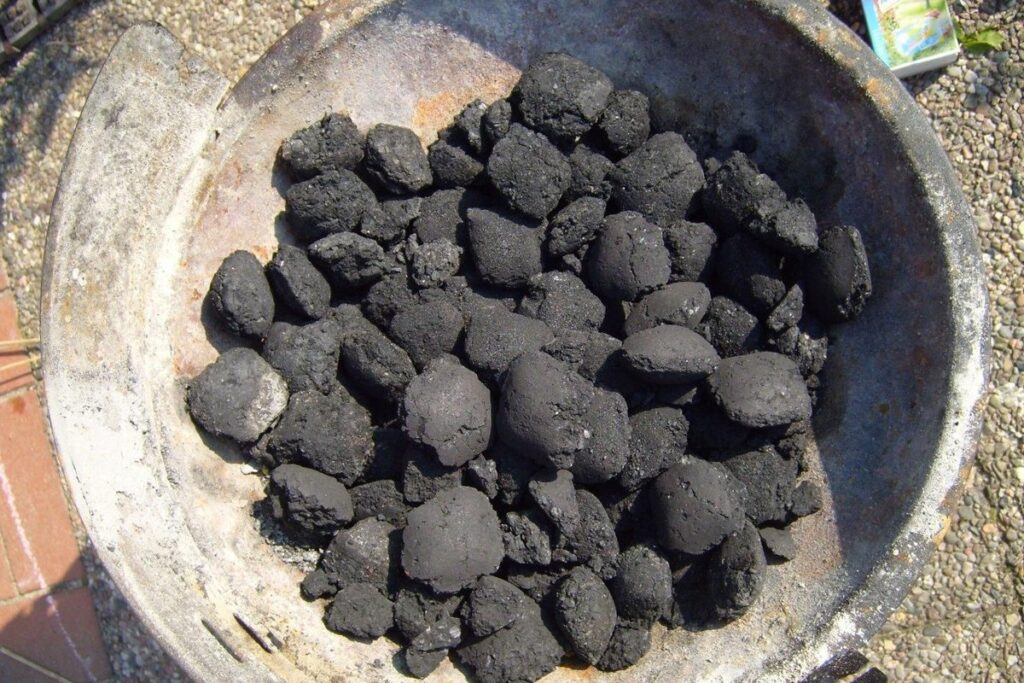
Lump charcoal is made by burning hardwood in a low-oxygen environment until only carbon remains. Nothing is pressed and no binder is added, so the pieces keep the shape of the original wood: branch sections, offcuts, sometimes whole split logs.
That lack of processing is the appeal. There is no starch, no coal dust and no accelerant, just carbonised wood. It is also the weakness, because the density of a lump depends on the density of the tree it came from. A bag can hold light, fast-burning pieces and dense, slow-burning ones side by side, and they will not release heat at the same rate.
The result is a fuel that lights easily and burns hot, but unpredictably. For a fifteen-minute steak that is irrelevant. For a four-hour cook it is the difference between a steady pit and a fire you fight all afternoon.
How Hot Does Lump Charcoal Burn?
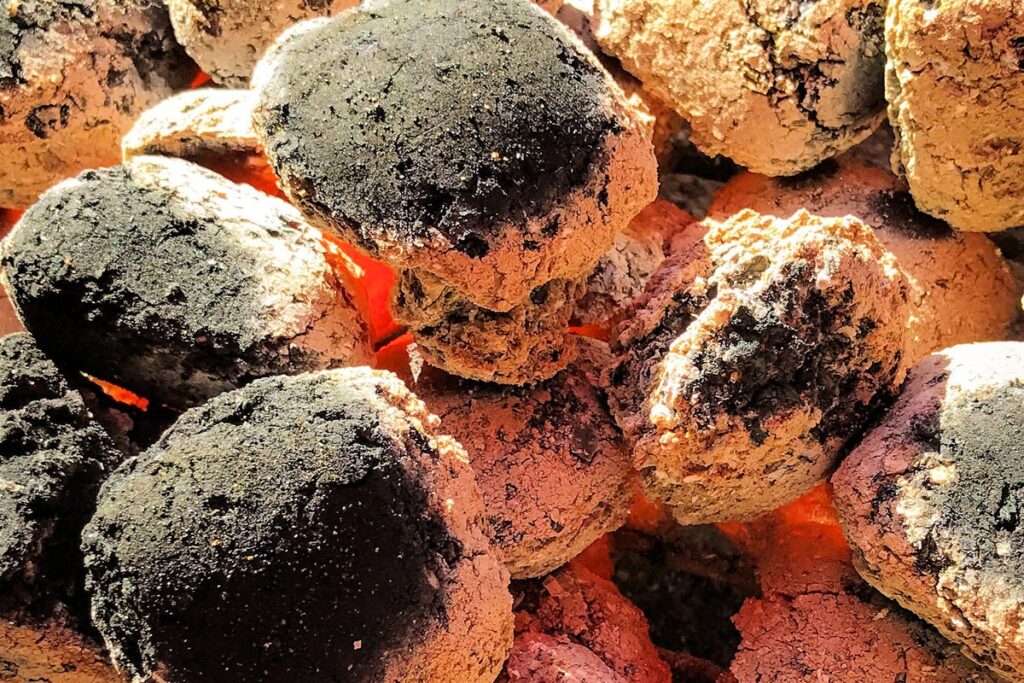
A well-ventilated bed of lump charcoal reaches 650 to 800°C at the surface and holds grilling temperature of 200 to 260°C in a covered kettle. Peak heat arrives faster than with briquettes, typically within 12 to 18 minutes of lighting.
That speed comes from airflow. The irregular shapes leave gaps between pieces, so oxygen reaches the burning surface easily. The same gaps are why the temperature falls quickly once the volatile material is gone, and why a full chimney usually gives 45 minutes to an hour of high direct heat before it needs topping up.
Briquettes trade that speed for endurance. Coconut shell briquettes are extruded to a consistent density, so they reach grilling temperature more slowly but hold it for up to 2.5 to 3+ hours per load.
Where Lump Charcoal for Grilling Wins
There are cooks where nothing else performs as well:
- Fast sears. A steak, a skirt steak or a tuna loin wants maximum surface heat immediately. Lump delivers it.
- Weeknight grilling. When dinner needs to be on the table in thirty minutes, the 12-minute light time matters more than a three-hour burn.
- Wok and plancha cooking. High, dry, aggressive heat suits thin metal cooking surfaces.
- Charcoal flavour on a short cook. Burgers and sausages pick up smoke in a short window, and lump gives that in abundance.
- Restaurant service. A grill line that is relit and topped up continuously does not need long burn time.
If your cooking is mostly short and hot, lump charcoal for grilling is the correct fuel and there is no reason to change.
Where Lump Charcoal Falls Short
The problems show up as cook length increases.
- Temperature swings. Mixed piece density means the fire moves as pieces burn at different rates. A long cook becomes active management rather than a set-and-hold.
- Heavy ash. Most lump runs 3 to 6% ash, and because pieces are irregular the ash does not fall cleanly. Airflow through the fire basket degrades through the session.
- Sparks and flare-ups. Small fragments and dust pop and throw sparks, which is a genuine hazard on a wooden deck or under a rotisserie.
- Volume inconsistency. Two bags of the same brand can behave differently, which makes costing per cook unreliable.
- Short burn. Frequent refuelling means opening the lid, losing heat and extending the cook.
The Two-Fuel Method: Lump Charcoal for Grilling Plus Coconut Briquettes
The practical answer for anyone cooking both fast and slow is to stop treating this as a choice. Use each fuel for what it does best in the same session.
- Build the base with briquettes. Fill the fire basket with coconut shell briquettes and light a chimney on top. This gives a stable heat floor that will still be there in three hours.
- Add lump for the sear. When you need a burst of high heat, add a small chimney of lit lump charcoal directly under the cooking surface.
- Layer smoke with wood. Two or three chunks of oak, hickory or pecan on the lit coal carry the flavour for 45 to 60 minutes each.
The result is steady heat for the length of the cook plus the peak heat and flavour that lump provides, without the ash load of an all-lump fire. Full specifications for the briquette base are on the coconut charcoal briquettes page.
Buying Lump Charcoal for Grilling in Bulk
Buyers sourcing for restaurants, distributors or private label programmes usually need both fuels from one supplier to keep logistics simple.
Our production focus is coconut shell charcoal briquettes, shipped in 20ft containers of approximately 14 to 15 tonnes from Tanjung Priok or Talang Duku. For buyers placing full container orders we can help arrange lump charcoal and wood chunks for grilling through our partner network, and advise on the species and piece size that suit your market.
If you are comparing specifications before ordering, start with our guide to grill briquettes for the full burn time and ash comparison table.
Frequently Asked Questions
Is lump charcoal for grilling better than briquettes?
Neither is universally better. Lump charcoal for grilling lights faster and reaches higher peak heat, which suits quick sears and steaks. Coconut shell briquettes hold a steadier temperature for longer, produce far less ash and are the better base fuel for smoking and long indirect cooks.
How long does lump charcoal for grilling last?
A full chimney of lump charcoal typically gives 45 minutes to 1 hour of high direct heat before it needs topping up. Coconut shell briquettes hold grilling temperature for up to 2.5 to 3+ hours per load.
Does lump charcoal for grilling burn hotter than briquettes?
Lump charcoal peaks higher and faster, but unevenly because pieces vary in size and density. Briquettes burn more consistently, which matters more than peak temperature for low-and-slow cooking.
Can I mix lump charcoal for grilling with coconut briquettes?
Yes, and many competition cooks do. Start a base bed of coconut briquettes for steady heat, then add lump charcoal or wood chunks for a burst of heat and flavour when you need it.
Do you supply lump charcoal for grilling for export?
Our production focus is coconut shell charcoal briquettes. For buyers ordering full containers we can help arrange lump charcoal and wood chunks through our partner network and advise on the right specification.
Related Charcoal & Grilling Guides
- Grill Briquettes
- Wood Chunks for Grilling
- BBQ Grill With a Smoker
- Best Gas Grills 2026
- Blues Hog Charcoal
- Coconut Charcoal Briquettes
- Shisha Charcoal Briquettes Supplier
- Charcoal Briquettes Supplier in Indonesia
- Coconut Shell Charcoal for BBQ
Product: Coconut Charcoal Briquettes — Export Grade for BBQ, Grill & Shisha