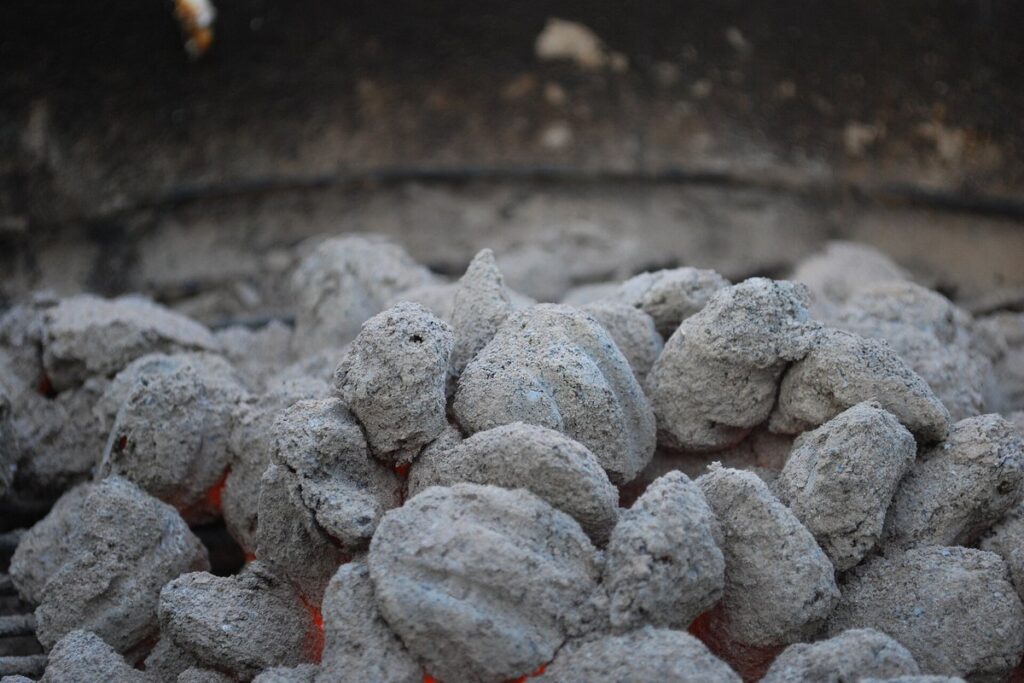
However, coconut shell charcoal is what you get when you carbonise the hard shell left over from coconut oil production. It is denser than wood, burns hotter and longer per kilo, and leaves a fraction of the ash. Those three properties explain why it displaced wood charcoal in the premium end of both the barbecue and shisha markets.
This page covers the numbers behind that claim, and where the limits are.
Daftar Isi
ToggleWhat Is Coconut Shell Charcoal?
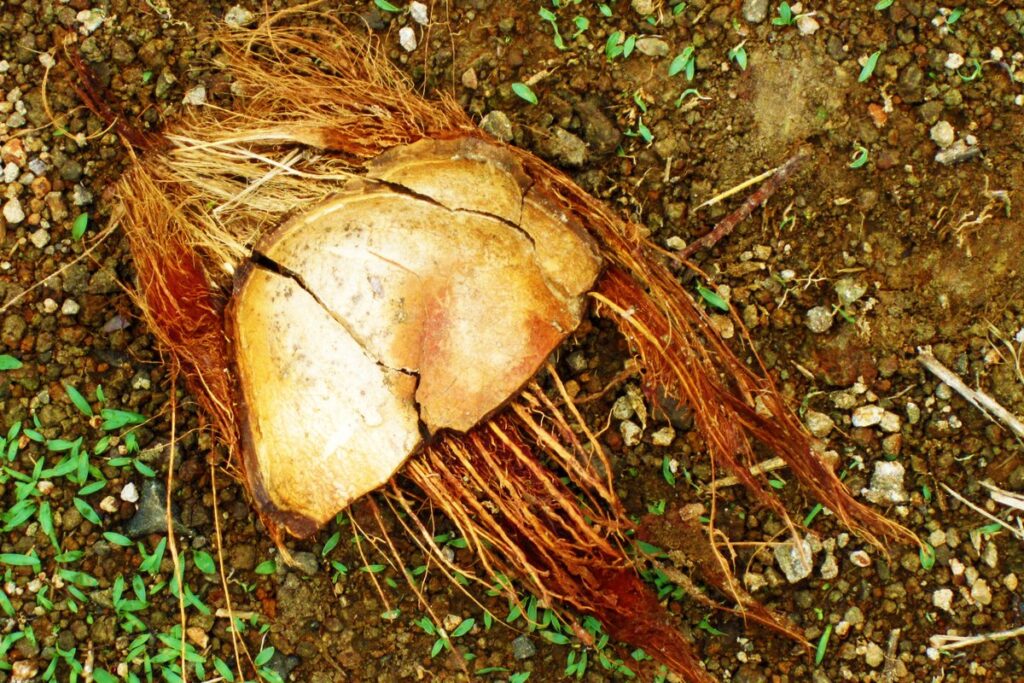
Coconut shell charcoal is produced by heating coconut shell in a low-oxygen kiln until only carbon and mineral ash remain. Nothing is added, and no binder is used unless the charcoal is later pressed into briquettes.
Moreover, the shell itself is a by-product. Coconuts are grown for oil and copra, the shell is waste, and carbonising it turns that waste into a fuel with a higher energy density than most hardwood charcoal. No trees are felled to produce it, which is why it is often the only charcoal on the market that is genuinely a by-product fuel.
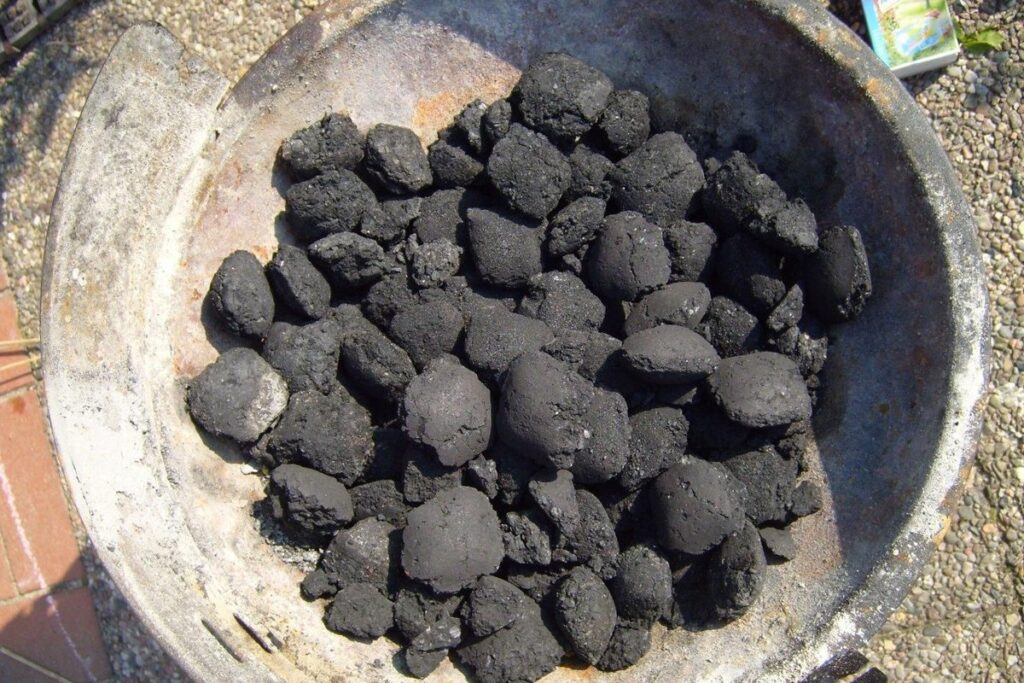
Most export volume is pressed into briquettes for uniformity. Loose coconut shell charcoal exists but is harder to ship and control in a fire basket, which is why the briquette form dominates.
Calorific Value: 7,200 to 7,500 kcal/kg
In addition, calorific value is the energy released per kilo of fuel. Our specification is minimum 7,200 to 7,500 kcal/kg, which sits at the top of the biomass charcoal range.
The reason is density. Coconut shell is substantially denser than wood, so a given volume holds more carbon and releases more heat. A bag of coconut shell charcoal does the work of a larger bag of wood charcoal, which matters once freight is calculated per tonne rather than per bag.
For example, for importers, calorific value per kilo is a freight efficiency metric as much as a cooking metric: you are paying to ship energy, and the fuel with the highest energy per tonne is the cheapest to move.
Ash Content Compared With Wood Charcoal
Ash is the mineral residue left after carbon burns off. It does nothing useful, blocks airflow and has to be disposed of.
| Fuel | Typical ash content |
|---|---|
| Coconut shell charcoal (our spec) | Max 1.8 to 2.5% |
| Hardwood lump charcoal | 3 to 6% |
| Wood-based briquettes | 5 to 8% |
Therefore, the difference is not cosmetic. In a long cook, ash accumulates in the fire basket and progressively restricts airflow. A fire running on 6% ash fuel starts to fade halfway through a session; one running on 2% ash holds for hours. In a shisha bowl, high ash appears as heat fade within thirty minutes.
Low ash is the single most underrated specification in charcoal buying, and the easiest one to verify on a COA.
Burn Time and Heat Stability
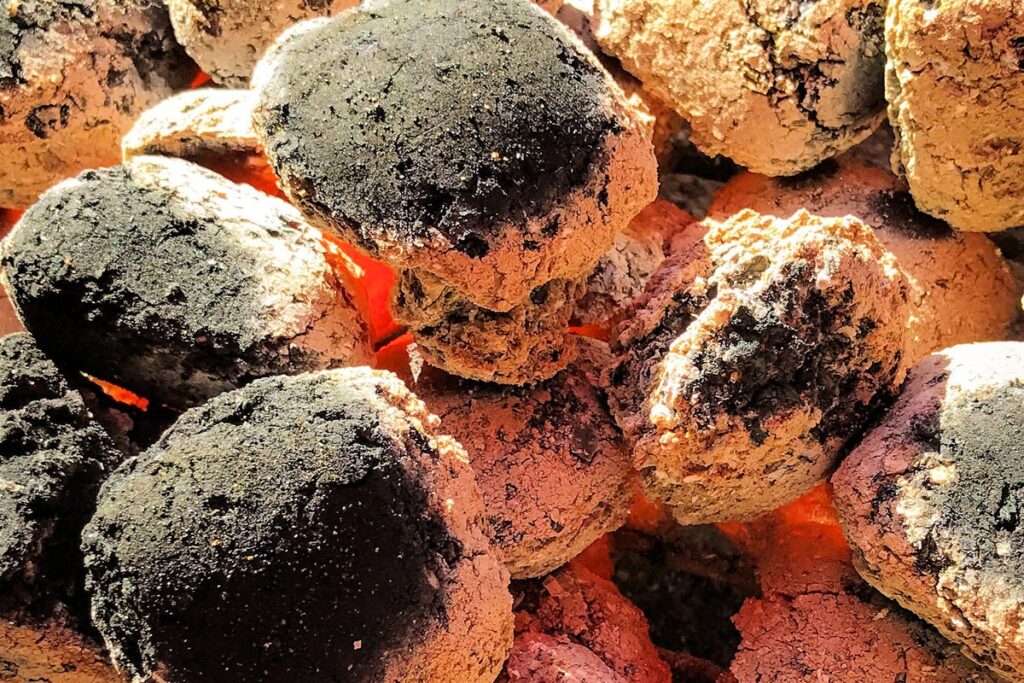
Consequently, a load of BBQ-grade coconut shell briquettes burns for up to 2.5 to 3+ hours at grilling temperature. In a smoker using the snake or minion method, the same fuel holds a low temperature for many hours on a single charge.
Stability comes from uniformity. Extruded briquettes have consistent density piece to piece, so they release heat at a consistent rate. Irregular lump charcoal does not: light pieces burn out while dense pieces are still coming up, which produces the temperature swings long cooks are notorious for.
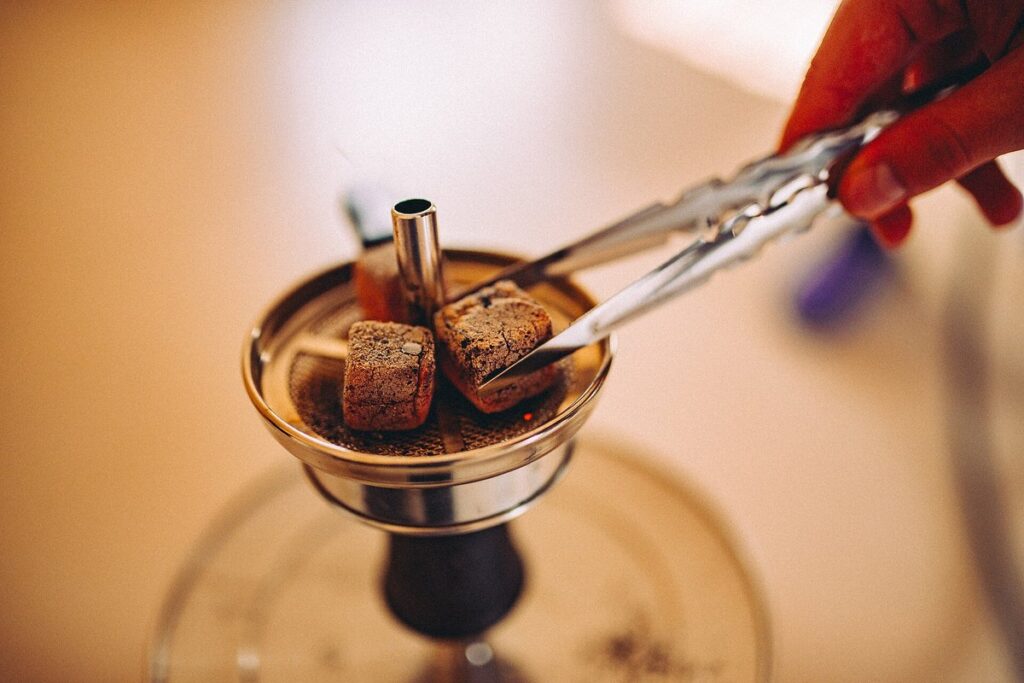
As a result, shisha-grade cubes burn 60 to 90 minutes each, with the same principle applied at a smaller scale: consistent cube size means consistent heat on the bowl.
Coconut Shell Charcoal vs Hardwood Charcoal
A fair comparison, because each wins somewhere.
| Coconut shell charcoal | Hardwood charcoal | |
|---|---|---|
| Light time | 15 to 20 minutes | 12 to 18 minutes |
| Peak heat | High and steady | Higher and faster |
| Burn time | 2.5 to 3+ hours per load | 45 to 90 minutes at high heat |
| Ash | Max 1.8 to 2.5% | 3 to 6% |
| Sparks | None | Possible |
| Smoke flavour | Neutral, add wood chunks | Species-specific flavour |
| Best for | Long cooks, smoking, shisha | Fast sears, short cooks |
Hardwood charcoal peaks faster and carries its own species flavour. Coconut shell charcoal holds temperature longer and burns cleaner. Serious cooks usually keep both: see our lump charcoal for grilling guide for how to combine them in one session.
Sourcing Coconut Shell Charcoal for Export
We produce coconut shell charcoal briquettes in Jambi, Sumatra, and export in 20ft containers of approximately 14 to 15 tonnes from Tanjung Priok (Jakarta) or Talang Duku (Jambi), on FOB or CIF terms.
Meanwhile, packaging runs from 1 kg inner boxes in 10 kg or 20 kg master cartons to bulk PP mesh bags, with private label and OEM options. MSDS, Self-Heating Test and Certificate of Analysis are available on request, and samples can be dispatched before a container order.
Full technical specifications are on the coconut charcoal briquettes product page. For the buyer’s view of specification and packaging, read the coconut charcoal briquettes guide.
Background on how charcoal quality is produced and graded is documented by FAO reference on charcoal production and quality.
Frequently Asked Questions
Why does coconut shell charcoal burn hotter than wood charcoal?
Coconut shell is far denser than wood, so it carbonises into a fuel with a higher fixed carbon content, minimum 75 to 80% in our specification. That density produces a calorific value of 7,200 to 7,500 kcal/kg and a much longer burn.
What is the ash content of coconut shell charcoal?
Furthermore, our coconut shell charcoal is specified at maximum 1.8 to 2.5% ash, against 5 to 8% for most wood charcoal. Lower ash means better airflow through the fire basket and far easier clean-up.
Is coconut shell charcoal better for BBQ than hardwood charcoal?
For long cooks and smoking, yes: steadier heat, longer burn and less ash. For very fast, hot sears, hardwood lump charcoal lights and peaks more quickly.
Does coconut shell charcoal produce sparks?
Similarly, no. The uniform, dense surface of carbonised coconut shell burns without sparks or flare-ups, which makes it safer on a patio grill and under a rotisserie.
Do you export coconut shell charcoal in bulk?
Yes, in briquette form from our facility in Jambi, Indonesia. Standard export minimum is one 20ft container, approximately 14 to 15 tonnes, FOB Tanjung Priok or Talang Duku.
Related Charcoal & Grilling Guides
- Grill Briquettes
- Lump Charcoal for Grilling
- Wood Chunks for Grilling
- BBQ Grill With a Smoker
- Best Gas Grills 2026
- Blues Hog Charcoal
- Coconut Charcoal Briquettes
- Shisha Charcoal Briquettes Supplier
- Charcoal Briquettes Supplier in Indonesia
Product: Coconut Charcoal Briquettes — Export Grade for BBQ, Grill & Shisha